
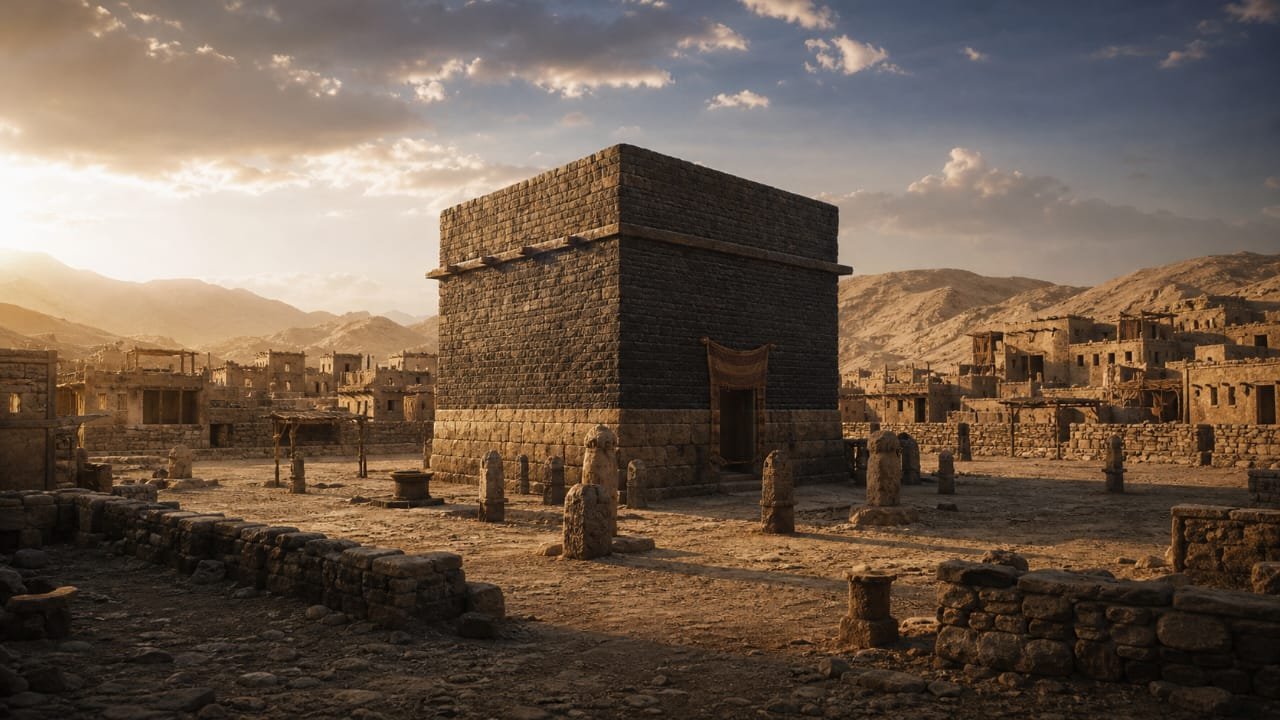
Was Imam Ali ibn Abi Talib born inside the Kaaba in Mecca? According to the well-known Shia tradition, yes. Shia Muslims regard this event as one of the special honors of Imam Ali, the cousin and son-in-law of Prophet Muhammad and the first Imam in Shia Islam.
The story is also mentioned in some historical works written by Sunni scholars. However, not all Muslim scholars accept the report as historically established. Some question its authenticity and point to reports about the birth of another person, Hakim ibn Hizam, inside the Kaaba.
So, what do the historical sources actually say? Why is this event so important to Shia Muslims, and why do scholars disagree about it?
Let’s examine the story, the main sources, and the different views without losing sight of the central question.
When and Where Was Imam Ali Born?
Imam Ali ibn Abi Talib was born in Mecca, in present-day Saudi Arabia. According to the traditional Shia account, he was born on the 13th of Rajab, approximately 23 years before the Hijrah, the migration of Prophet Muhammad from Mecca to Medina.
His father was Abu Talib ibn Abd al-Muttalib, and his mother was Fatima bint Asad.
Shia historical works identify the Kaaba itself—not merely the surrounding sanctuary—as the place of his birth. This is an important distinction because the central question is whether Imam Ali was born inside the sacred building.
The date of 13 Rajab is widely celebrated by Shia Muslims as Imam Ali’s birthday. The exact conversion of this lunar date into the Gregorian calendar changes from year to year.
What Do Shia Sources Say About His Birth?
The birth of Imam Ali inside the Kaaba is a well-established part of Shia historical and devotional tradition. It is not simply a modern story created for religious celebrations.
One important source is Al-Irshad, a work by Shaykh al-Mufid (d. 413 AH), one of the influential scholars of early Imami Shia Islam.
In his account of Imam Ali’s life, Shaykh al-Mufid writes:
«وُلِدَ بِمَكَّةَ فِي الْبَيْتِ الْحَرَامِ يَوْمَ الْجُمُعَةِ الثَّالِثَ عَشَرَ مِنْ رَجَبٍ سَنَةَ ثَلَاثِينَ مِنْ عَامِ الْفِيلِ»
Meaning: “He was born in Mecca, in the Sacred House, on Friday, the thirteenth of Rajab, in the thirtieth year of the Year of the Elephant.”
The wording identifies the Sacred House as his birthplace. It also gives the traditional date of his birth.
You can read the Arabic text in "Shaykh al-Mufid’s Al-Irshad".
Other Shia works, including Manaqib Al Abi Talib by Ibn Shahr Ashub and Kashf al-Ghumma by Ali ibn Isa al-Irbili, also belong to the broader tradition of accounts describing Imam Ali’s virtues and birth.
These sources show that the belief has a long history within Shia scholarship. As with any historical report, however, the existence of an early written account should be distinguished from the separate question of how every detail of that account can be verified.
The Story of Fatima bint Asad and the Kaaba
The traditional Shia account connects Imam Ali’s birth with his mother, Fatima bint Asad.
According to a well-known narration, Fatima bint Asad was approaching the time of childbirth when she came to the Kaaba and prayed to God for help.
The report describes her addressing God and recalling the faith of her ancestor, Prophet Ibrahim (Abraham), who is associated with the building of the Kaaba.
Part of the prayer is narrated in Arabic as follows:
«يَا رَبِّ إِنِّي مُؤْمِنَةٌ بِكَ وَبِمَا جَاءَ مِنْ عِنْدِكَ مِنْ رُسُلٍ وَكُتُبٍ»
Meaning: “My Lord, I believe in You and in the messengers and books that have come from You.”
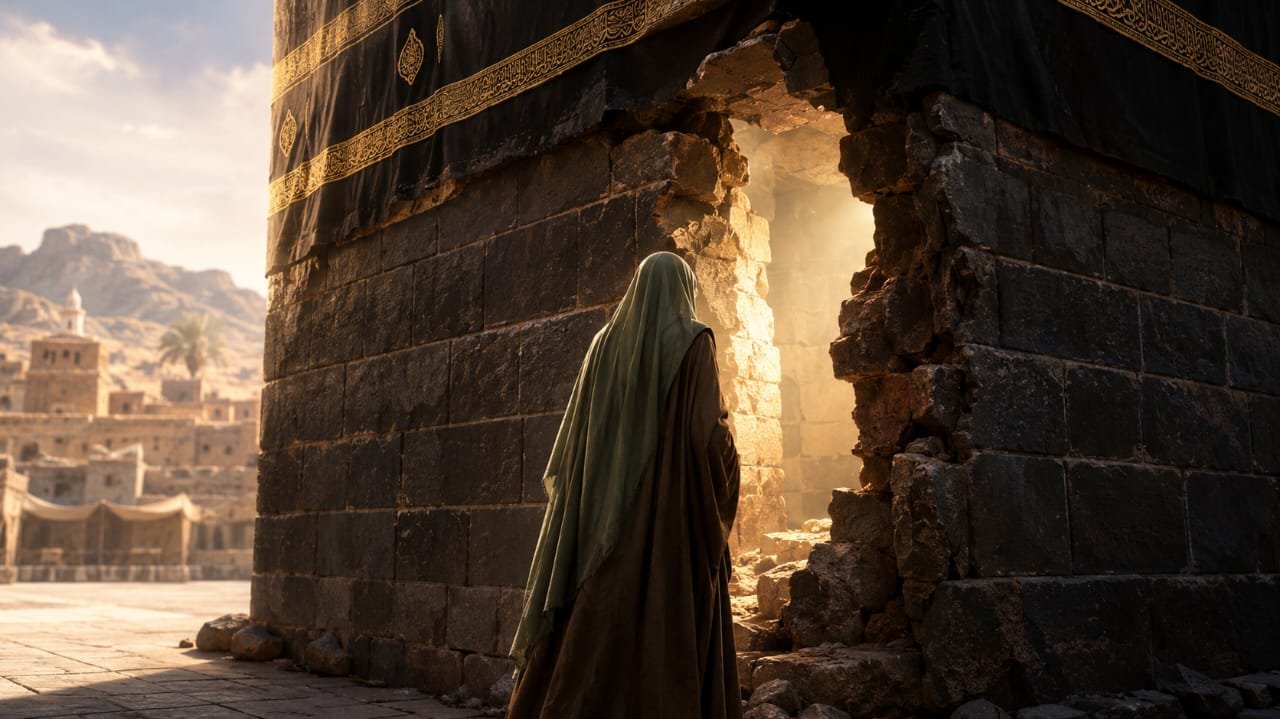
In the popular Shia narration, the wall of the Kaaba then opened, allowing Fatima bint Asad to enter. She remained inside, and Imam Ali was born there. The story continues with her leaving the Kaaba carrying her newborn son.
For Shia Muslims, this is a remarkable account of the birth of a person who would later become known for his knowledge, courage, justice, and devotion to God.
It is important, though, to understand the status of this story. The opening of the wall and the other details belong to the narrated account found in Shia religious literature. The details are not reported or accepted in the same way by every historical source or Muslim scholar.
The central belief in Imam Ali’s birth inside the Kaaba is therefore best discussed alongside the sources that transmit it, rather than treating every part of the popular story as equally established.
Did Sunni Scholars Also Report Imam Ali’s Birth in the Kaaba?
Yes. Some Sunni scholars and historical writers mentioned the report, although other Sunni scholars rejected it or considered it unproven.
One important example is al-Hakim al-Nishapuri (d. 405 AH), the Sunni hadith scholar known for Al-Mustadrak ala al-Sahihayn.
While discussing a report about Hakim ibn Hizam, al-Hakim challenged the claim that no one had been born in the Kaaba before or after Hakim. He wrote:
«فَقَدْ تَوَاتَرَتِ الْأَخْبَارُ أَنَّ فَاطِمَةَ بِنْتَ أَسَدٍ وَلَدَتْ أَمِيرَ الْمُؤْمِنِينَ عَلِيَّ بْنَ أَبِي طَالِبٍ كَرَّمَ اللَّهُ وَجْهَهُ فِي جَوْفِ الْكَعْبَةِ»
Meaning: “Reports have come repeatedly that Fatima bint Asad gave birth to the Commander of the Faithful, Ali ibn Abi Talib, inside the Kaaba.”
This passage is preserved in the Arabic text of "Al-Mustadrak available through IslamWeb’s library".
The passage is significant because it demonstrates that the claim was not mentioned only by Shia authors. A well-known Sunni hadith scholar also defended the report.
However, al-Hakim’s statement does not mean that all Sunni scholars accepted his conclusion. Scholars differed over the strength of the evidence and the reliability of the reports.
The careful historical conclusion is that some Sunni sources transmitted or accepted the account, while others did not regard it as established.
Why Do Some Sunni Scholars Disagree?
One reason for the disagreement is the report concerning Hakim ibn Hizam, a companion of the Prophet.
Some Sunni historical and biographical works state that Hakim ibn Hizam was born inside the Kaaba. Scholars who accept this report and reject the account about Imam Ali may conclude that Hakim was the person uniquely associated with this distinction.
For example, the Sunni website IslamWeb argues that the birth of Hakim ibn Hizam is established, while it does not consider the report about Imam Ali’s birth in the Kaaba to be established by the Quran or the Prophet’s Sunnah.
You can read this position in "IslamWeb’s answer about the birth of Ali".
This disagreement involves different evaluations of historical reports. It is not enough simply to say that one side has a narration and the other does not. The reports must be examined according to the methods and standards used by the scholars discussing them.
For Shia Muslims, the account of Imam Ali’s birth is supported by their historical and devotional tradition. Scholars who reject it generally require evidence that meets their own standards of historical or hadith authenticity.
A balanced article should explain both positions without suggesting that every Sunni scholar holds the same view.
What About the Historical Account of Hakim ibn Hizam?
An interesting early historical source is Akhbar Makka, written by al-Fakihi, a historian of Mecca.
In this work, a report identifies Hakim ibn Hizam as the first person born in the Kaaba. This report is relevant because it helps explain why some scholars have regarded Hakim’s birth as a unique historical event.
At the same time, the existence of a report about Hakim does not, by itself, prove that Imam Ali could not also have been born there. That conclusion depends on how the historical statements are understood and how the evidence behind them is evaluated.
Some later discussions attempt to distinguish between different claims about who was first to be born in the Kaaba. Because the reports and their interpretations need to be examined in their original contexts, it is better not to present a single simplified explanation as though all historians agreed on it.
The important point for readers is that the reports about Hakim ibn Hizam are a major part of the disagreement, but they do not erase the fact that Imam Ali’s birth inside the Kaaba is also recorded in historical literature.
Does the Quran Say That Imam Ali Was Born Inside the Kaaba?
No verse of the Quran explicitly states that Imam Ali was born inside the Kaaba.
The Quran does, however, emphasize the religious importance of the Kaaba. Allah says:
«إِنَّ أَوَّلَ بَيْتٍ وُضِعَ لِلنَّاسِ لَلَّذِي بِبَكَّةَ مُبَارَكًا وَهُدًى لِّلْعَالَمِينَ»
Meaning: “Indeed, the first House established for humanity was the one at Bakkah, blessed and a guidance for the worlds.”
Quran 3:96
This verse describes the importance of the Sacred House. It does not identify Imam Ali’s birthplace.
Therefore, it would be inaccurate to use this verse as direct proof of the historical claim. The question of Imam Ali’s birth is addressed through historical and narrational sources, not an explicit Quranic statement.
Why Is Imam Ali’s Birth in the Kaaba Important to Shia Muslims?
For Shia Muslims, Imam Ali’s reported birth inside the Kaaba is a special honor connected with his spiritual status.
Imam Ali is regarded in Shia Islam as the first Imam after Prophet Muhammad. Shia teachings emphasize his knowledge, justice, courage, devotion, and close relationship with the Prophet.
The account of his birth in the Sacred House is understood as one of the remarkable virtues associated with his life. It is remembered during celebrations of 13 Rajab and in literature about his character and merits.
However, it is useful to make a distinction: the birth account is one of the virtues associated with Imam Ali in Shia tradition. The broader Shia belief in his Imamate is based on a wider body of theological arguments and narrations, rather than on this single historical event alone.
Understanding that distinction allows readers to appreciate why the birth story matters without confusing a historical report with the entire basis of a religious belief.
Frequently Asked Questions
Was Imam Ali definitely born inside the Kaaba?
According to the traditional Shia account, yes. Shia historical works such as Al-Irshad explicitly identify the Kaaba as his birthplace. Some Sunni scholars also transmitted the report, while others considered it unproven. There is no universal agreement among Muslim scholars on its historical authenticity.
What was the date of Imam Ali’s birth?
The traditional Shia date is the 13th of Rajab, approximately 23 years before the Hijrah.
Who was Imam Ali’s mother?
His mother was Fatima bint Asad, a member of the Banu Hashim family and the wife of Abu Talib.
Did Sunni scholars mention Imam Ali’s birth in the Kaaba?
Yes. Al-Hakim al-Nishapuri mentioned and defended the account in Al-Mustadrak. Other Sunni scholars questioned its authenticity, so it would be inaccurate to say that all Sunni scholars accepted it.
Was Hakim ibn Hizam also reported to have been born inside the Kaaba?
Yes. Some Sunni historical and biographical sources report that Hakim ibn Hizam was born inside the Kaaba. This report is one of the reasons scholars disagree about whether the distinction belongs exclusively to Imam Ali.
Did the wall of the Kaaba open for Fatima bint Asad?
The opening of the wall is part of a well-known Shia narration about the birth. The account is important in Shia devotional tradition, but its individual details should be distinguished from the basic historical claim and evaluated through their own sources.
Final Thoughts
Was Imam Ali born inside the Kaaba? The answer depends on which historical tradition and standards of evidence are being considered.
For Shia Muslims, the answer is yes: his birth inside the Kaaba is a recognized virtue supported by their historical tradition. The report is also found in the writings of some Sunni scholars, including al-Hakim al-Nishapuri. Other Sunni scholars, however, have rejected it or regarded it as unproven, often citing reports about Hakim ibn Hizam.
A careful reading of the sources therefore leads to a clear conclusion: the birth of Imam Ali inside the Kaaba is a longstanding and significant belief in Shia Islam, but its historical authenticity is disputed among Muslim scholars.
Learning about both the supporting accounts and the disagreements helps readers understand not only the story itself, but also why it continues to hold an important place in Shia memory and devotion.
Sources and Further Reading
- Shaykh al-Mufid, Al-Irshad — "Arabic text".
- Al-Hakim al-Nishapuri, Al-Mustadrak ala al-Sahihayn — "Arabic text and report".
- Al-Fakihi, Akhbar Makka — "Arabic historical text".
- IslamWeb — "A Sunni discussion of the claim".
- IslamQuest — "Persian research on the evidence for Imam Ali’s birth in the Kaaba".