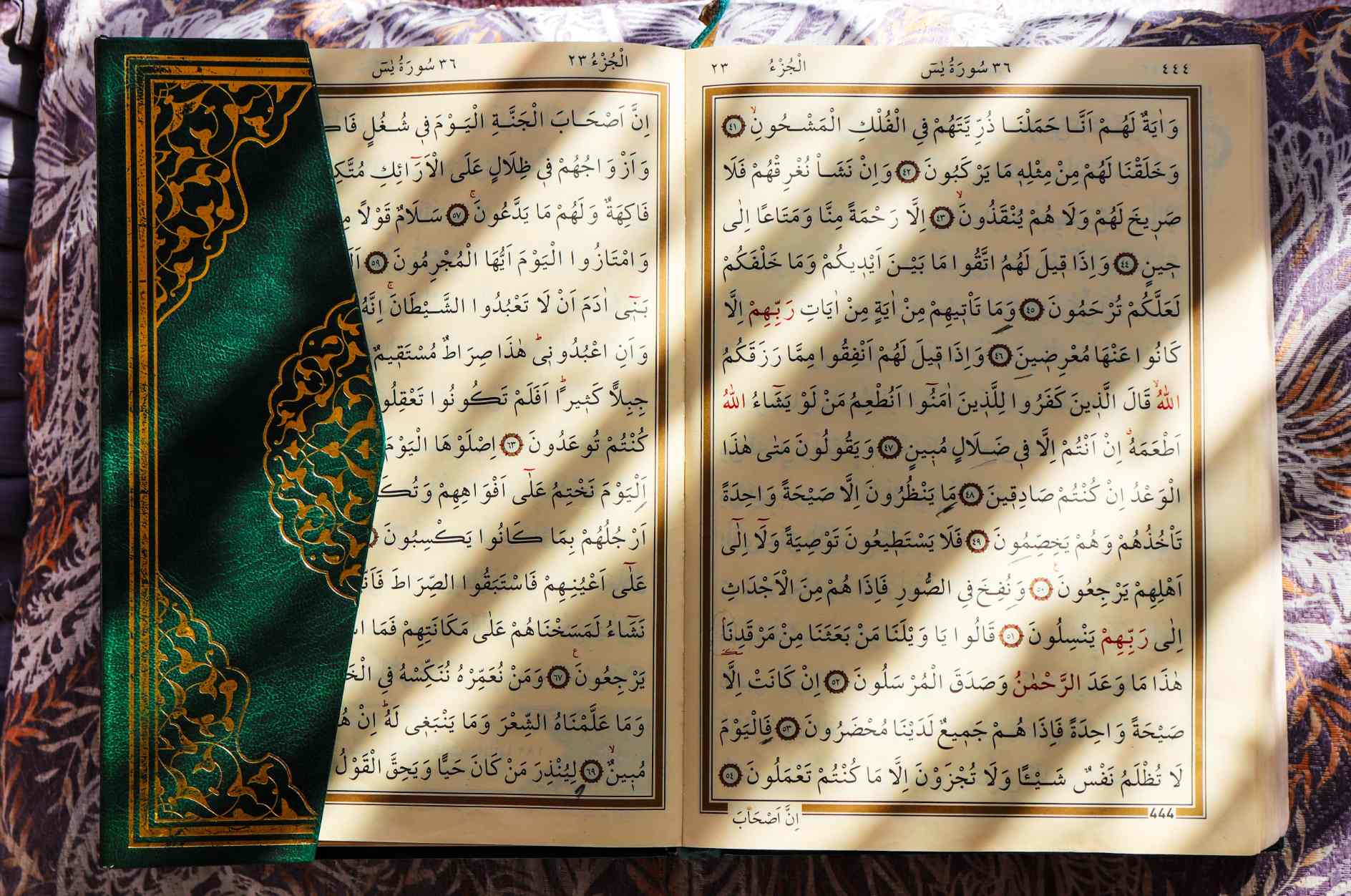
Shia Muslims believe in the exact same Quran as all other Muslims. In the research dossier, the Quran is not just a holy book among others. It is the supreme and unaltered criterion for faith, law, and truth. It is also the first filter used to judge every hadith and every religious ruling.
That means one simple thing: in Shia Islam, nothing can override the Quran. If a narration or legal opinion clearly contradicts the Book of Allah, it is rejected.
What do Shia Muslims believe about the Quran?
Shia Muslims believe that the Quran is the Book of Allah, the same Quran followed by the whole Muslim Ummah. The dossier is very clear that Shia Muslims do not have a different scripture, a different version, or a separate holy book.
The Quran is the highest authority in their faith. It is the foundation of theology and jurisprudence. In practical terms, that means every hadith must be tested against the Quran. If a narration agrees with the Quran, it may be accepted. If it contradicts the Quran, it is dismissed as false or fabricated.
This is why the dossier describes the Quran as an absolute filter. It protects the religion from error, confusion, and fabricated teachings.
Why is the Quran so central in Shia Islam?
According to the research, Shia Islam is built on the principle of Quran + Sunnah of the Prophet + Sunnah of the Ahl al-Bayt. The Quran is not isolated from the Ahl al-Bayt. Rather, it is understood together with them.
The dossier also emphasizes that the Imams are not above the Quran. They are servants of God whose authority is tied directly to the Quran. In fact, the Imams themselves instructed their followers to reject any saying attributed to them if it contradicts the Book of Allah.
That is a very important point. It shows that Shia belief does not treat the Imams as a replacement for the Quran. It treats them as protectors and teachers of Quranic guidance.
How does Shia Islam judge hadith using the Quran?
The research says the Quran is the final measure for hadith. A hadith cannot be accepted simply because it has been narrated or repeated. It must also agree with the Book of Allah.
One hadith in the dossier explains this clearly. The Prophet Muhammad is reported to have said:
"O mankind! Whatsoever comes to you from me that agrees with the Book of Allah, I truly said it. But whatsoever comes to you that contradicts the Book of Allah, I never said it."
— Prophet Muhammad (s.a.w.)
This is the heart of the Shia method. The Quran is not one source among many. It is the standard by which everything else is measured.
The dossier also cites the statement of Imam Ja'far al-Sadiq:
"Every hadith that does not agree with the Book of Allah is a vanity."
— Imam Ja'far al-Sadiq (a.s.)
Shaykh al-Saduq gives the same rule in sharper language, saying that any hadith which does not agree with the Book of Allah is a fabrication. The meaning is the same: the Quran comes first.
What Quranic evidence is used in the research?
The dossier highlights two verses that support the Quran’s supreme authority.
Surah Al-Baqarah 2:106
"Whatever a verse We abrogate or cause to be forgotten, We bring a better one or one similar to it."
Surah Al-Baqarah (2:106)
The dossier explains this verse as proof that only the Quran can abrogate the Quran. In other words, a Quranic ruling is replaced only by another Quranic ruling, not by a hadith or a human decree.
Surah An-Nahl 16:101
"And when We change a verse in place of another verse, and Allah knows best of what He sends down, they say, ‘You are but a forger.’ Nay, but most of them know not."
Surah An-Nahl (16:101)
This verse reinforces the same principle. The authority to replace one divine instruction with another belongs to Allah alone through revelation. The dossier uses this to show that the Quran remains the final legal standard.
What is the relationship between the Quran and the Ahl al-Bayt?
The research presents the Quran and the Ahl al-Bayt as inseparable in Shia methodology. This is based on Hadith al-Thaqalayn, in which the Prophet says:
"I am leaving among you two weighty things: the Book of Allah and my progeny, my Ahl al-Bayt."
— Prophet Muhammad (s.a.w.)
The dossier uses this hadith to show that guidance is not built on the Quran alone in a narrow sense. Rather, the Quran is understood with the living explanation and protection of the Ahl al-Bayt.
At the same time, the Ahl al-Bayt are never placed above the Quran. Their role is tied to it. Their authority serves the Quran, not the other way around.
Does Shia Islam accept any hadith that sounds religious?
No. The dossier is very strict on this point. A narration may sound noble, widely repeated, or even religiously impressive, but if it conflicts with the Quran, it must be rejected.
This is one of the strongest features of Shia legal methodology. It is meant to protect the religion from corruption, especially in light of historical persecution and fabricated teachings. The Quran acts as an impenetrable filter.
That is why the dossier says Shia scholars developed a rigorous method for handling contradictory traditions. The goal was not to add complexity for its own sake. The goal was to preserve the purity of divine guidance.
What is the practical meaning for ordinary Shia Muslims?
For a Shia Muslim, this belief means the Quran is not just read for blessing or recitation. It is used as the active foundation of daily faith and law.
So if a person hears a hadith, a legal opinion, or a fatwa that clearly opposes the Quran, the Shia response is to reject it. The Quran has the final word.
This creates a simple but powerful religious principle: the Book of Allah is the ultimate truth, and everything else must be tested against it.
Conclusion
Shia Muslims believe in the same Quran as all other Muslims. They regard it as the highest authority in religion, the final standard for truth, and the decisive filter for all hadith and rulings. In Shia Islam, the Quran stands at the center of faith, and anything that conflicts with it is rejected.