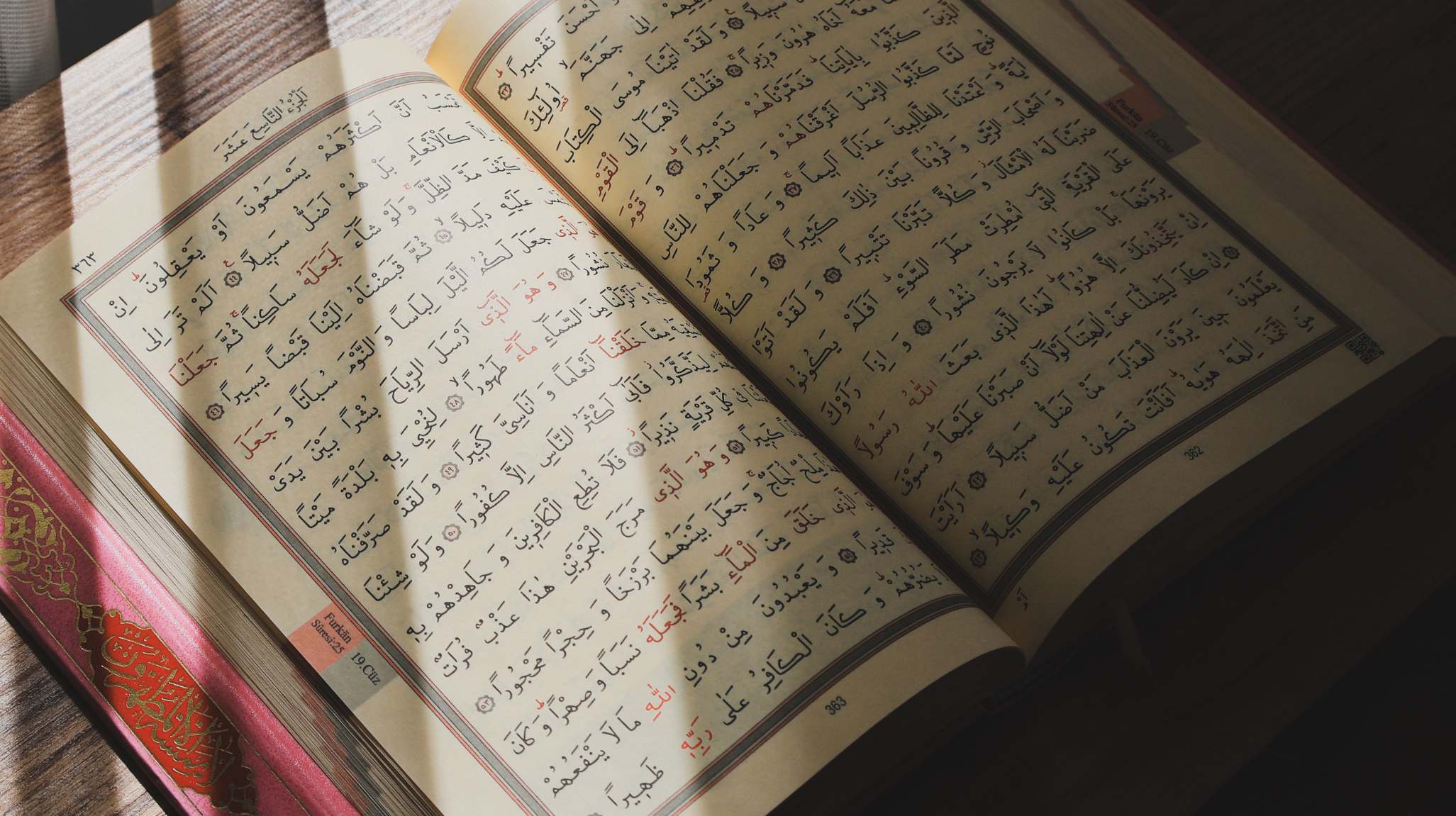
No. Shia Muslims do not have a different Quran. They follow the same Book of Allah that all Muslims read. In Shia Islam, the Quran is the highest authority, and every teaching, narration, or legal ruling must be measured against it. If something contradicts the Quran, Shia scholars reject it.
Some confusion comes from early personal copies of the Quran (mushafs) that contained extra explanatory words alongside certain verses. According to the research, those additions were not part of the Quran itself. They were understood as divine explanation, or Hikmah—in simple English, wisdom or clarification. So the issue is not a different Quran. It is a misunderstanding about explanation versus scripture.
Do Shia Muslims Have a Different Quran?
No. The Quran used by Shia Muslims is the same Quran used by Muslims everywhere.
That is the clearest answer the research supports. In Shia Islam, the Quran is the foundation of religion. It comes before everything else. Shia teaching is built on the Quran, the Sunnah of the Prophet, and the Sunnah of the Ahl al-Bayt, but the Quran remains the supreme standard.
This means a Shia Muslim does not treat any report, narration, or tradition as equal to the Quran. If a narration disagrees with the Book of Allah, it is rejected.
The research also explains why some people raise the accusation of tahrif, which means distortion or alteration of the Quran. The material provided does not offer a full standalone refutation of that accusation, but it does show why the accusation is not supported by the sources in front of us.
Why some people think there is a difference
The research points to the verse of mut’ah in Surah An-Nisa:
فَمَا اسْتَمْتَعْتُمْ بِهِ مِنْهُنَّ فَآتُوهُنَّ أُجُورَهُنَّ فَرِيضَةً
“So for whatever you enjoy from them, give them their due compensation as an obligation.”
Surah An-Nisa (4:24)
The dossier says that some companions, including Ibn ‘Abbas, Ubayy b. Ka‘b, and Ibn Mas‘ud, recited this verse with an additional phrase: “to a specified term.”
At first glance, that can look like a missing part of the Quran. But the research explains that this is not how Shia scholars understand it. They classify that extra phrase as Hikmah—divine explanation, not Quranic text.
So the key point is simple: the extra phrase was not treated as a second Quran. It was treated as explanation.
Quran and Hikmah are not the same thing
The research relies on the idea that Allah sent down both the Quran and Hikmah.
وَأَنْزَلَ اللَّهُ عَلَيْكَ الْكِتَابَ وَالْحِكْمَةَ
“And Allah sent down to you the Book and the wisdom.”
How this answers the question: This is used in the dossier to show that Allah revealed not only the Quran, but also explanatory divine wisdom. That is why some early recitations or notes may have included clarifying words without those words being part of the official Quran.
This matters because it removes the false assumption that every extra explanatory phrase must be part of the Quran. According to the research, that is not correct.
The Quran is the benchmark for everything
The research also gives a very important principle: anything that contradicts the Quran is false.
«Whatever comes from me and agrees with the Book of Allah, I truly said it. But whatever contradicts the Book of Allah, I never said it.»
— Reported from Imam Ja‘far al-Sadiq
That principle is central here. It means the Quran is not something Shia Muslims place below later reports. It is the measure used to judge all reports.
Shaykh al-Saduq is also quoted in the dossier as saying that every hadith which does not agree with the Book of Allah is a fabrication. Ayatullah Ja‘far Subhani gives the same basic rule: narrations must be checked against the Quran.
So the research presents a very consistent picture. Shia scholars do not build their faith on a different scripture. They build it on the same Quran, and they use the Quran as the final test for everything else.
What about the Ahl al-Bayt?
The research also mentions Hadith al-Thaqalayn, the “Two Weighty Things.”
In this hadith, the Prophet says he is leaving behind the Book of Allah and his progeny, the Ahl al-Bayt.
This does not mean the Ahl al-Bayt replace the Quran. It means they are tied to it and help guide Muslims in understanding it correctly. The research presents them as inseparable from the Quran in guidance, not as a separate scripture.
The practical meaning for everyday life
For a Shia Muslim, the Quran is the final authority in belief and law.
That has a very practical result. If someone hears a religious claim, a historical story, or even a narration attributed to an Imam, it must still match the Quran. If it does not, it is discarded.
So in daily life, the Quran functions like the highest standard. It is not replaced. It is not reduced. It is not exchanged for another book. It remains the same Quran that Muslims across the world recite.
Conclusion
Shia Muslims do not have a different Quran. According to the research, they accept the same Book of Allah as all other Muslims. The confusion comes from misunderstandings about early explanatory phrases and the difference between Quranic text and Hikmah. In Shia thought, the Quran remains the highest authority, and everything else must be measured against it.
Frequently Asked Questions
Yes. The research says they follow the same Book of Allah.
Because they misunderstand early explanatory phrases in some personal mushafs and mistake them for part of the Quran.
In this research, it means divine wisdom or explanation, not Quranic text.
They compare it with the Quran. If it contradicts the Quran, it is rejected.
No. The research presents them as linked to the Quran in guidance, not as a substitute for it.