
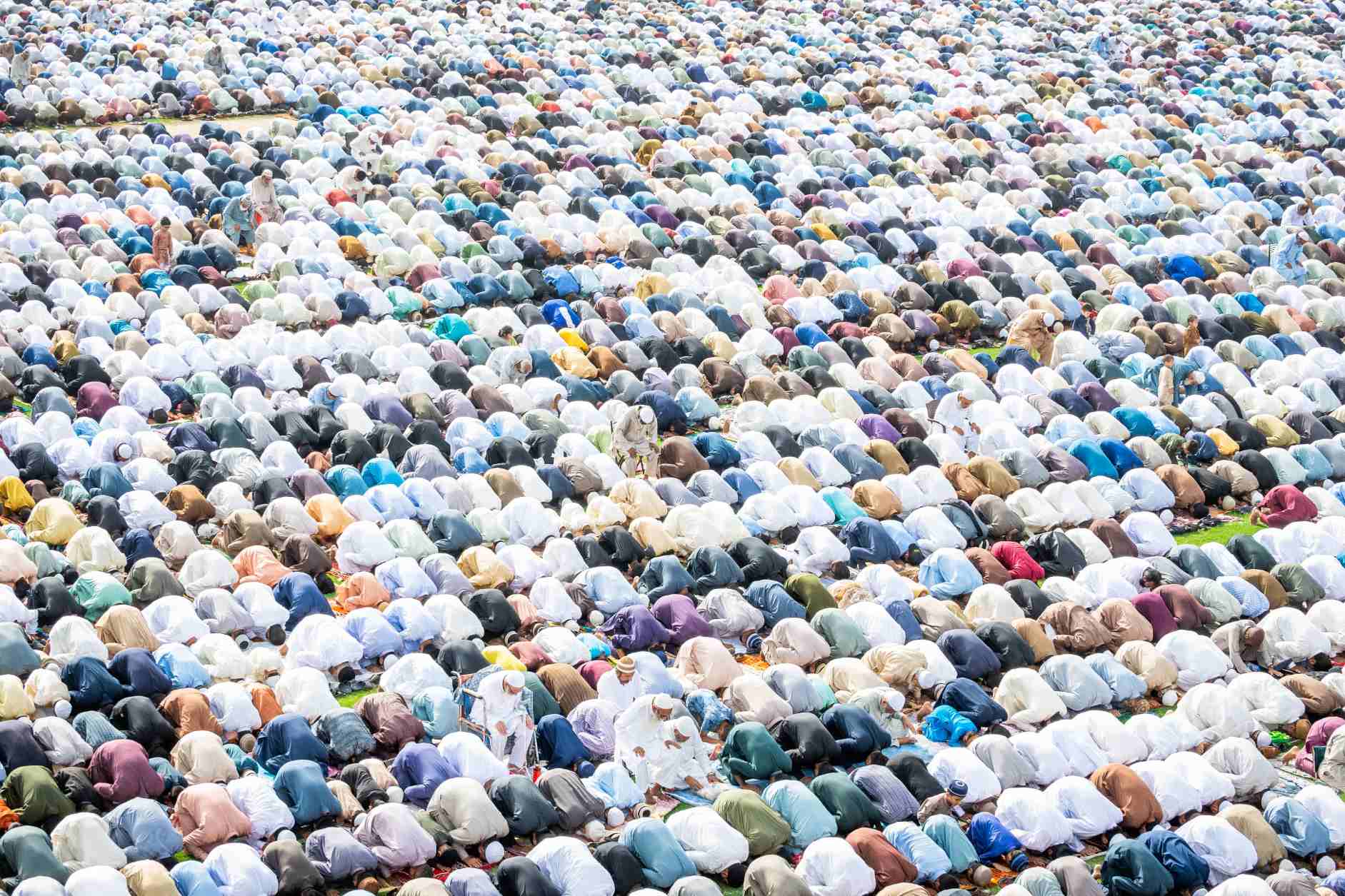
Dhuhr prayer is one of the most important prayers in Islam. It is the midday prayer, performed after the sun begins to decline from its highest point. In Shia Islam, it is a 4-rak‘at obligatory prayer that every adult Muslim must perform daily.
For many beginners, Dhuhr prayer can feel simple on the surface, but it carries deep meaning. It is not just a set of movements. It is a daily moment to turn back to Allah, remember Him in the middle of life, and step away from distraction.
In this guide, you will learn what Dhuhr prayer means, when it is prayed, why it matters, and how to perform it step by step.
What Does Dhuhr Mean?
The word Dhuhr (ظهر) refers to the time of day when the sun declines from its meridian. In simple English, this is the time just after noon, when the sun has passed its highest point.
That is why Dhuhr is called the midday or noon prayer.
It is one of the daily obligatory prayers in Islam and one of the pillars of worship. In Shia Islam, prayer is considered the pillar of religion. If prayer is accepted, other deeds are accepted too. If it is rejected, the rest is rejected as well.
Why Is Dhuhr Prayer So Important?
Dhuhr prayer is not only about completing an obligation. It is a sign of servitude to Allah and a way of staying spiritually alive during the day.
The research highlights several reasons it matters:
- Prayer is the pillar of religion.
- After knowing Allah, nothing is more beloved to Him than prayer.
- Neglecting obligatory prayer on purpose is a serious matter.
This shows that Dhuhr is not a small side practice. It is a central part of a Muslim’s daily life.
You can think of it like this: if your body needs food, your soul needs prayer. Dhuhr is one of the daily moments that keeps the heart connected to Allah.
When Is Dhuhr Prayer Time?
Dhuhr prayer begins when the sun declines from its meridian. The Qur’an points to this timing in Surah Al-Isra.
Qur’anic Evidence
Arabic:
أَقِمِ الصَّلَاةَ لِدُلُوكِ الشَّمْسِ إِلَى غَسَقِ اللَّيْلِ
English translation:
“Establish prayer at the decline of the sun [from its meridian] until the darkness of the night...”
Why this verse matters
This verse is used by the Ahl al-Bayt to explain the timing of the daily prayers. It clearly shows that prayer begins at the decline of the sun, which includes the start of Dhuhr.
In Shia jurisprudence, the time of Dhuhr and Asr overlaps. That means the time from noon until sunset is shared between the two prayers.
Can Dhuhr and Asr Be Combined?
Yes. In Shia jurisprudence, Dhuhr and Asr may be combined within their shared time window.
This does not mean one prayer is forgotten. It means both prayers can be prayed one after the other during the shared period from noon until sunset.
This practice is rooted in the historical action of the Prophet Muhammad (PBUH), who combined prayers in Medina without fear or rain in order to make religion easier for his community.
For many people, this is one of the practical features of Shia prayer law that makes daily worship easier to manage.
Is Dhuhr a 4-Rak‘at Prayer?
Yes. Dhuhr prayer is a 4-rak‘at prayer.
A rak‘at is one full unit of prayer with its own recitation and physical actions. Dhuhr has four of these units when prayed normally.
If you are travelling, the Dhuhr prayer is shortened to 2 rak‘ats. This shortened prayer is called Qasr (قصر).
What Is Qasr?
Qasr (قصر) means a shortened prayer for a traveller.
According to the dossier, a traveller who meets the required distance of 8 farsakhs shortens the 4-rak‘at Dhuhr prayer to 2 rak‘ats.
This is an important mercy in Islamic law. Travel can be tiring, difficult, and unpredictable. The shortened prayer makes worship easier without removing the obligation itself.
What Is the Nafilah of Dhuhr?
The Nafilah (نافله) of Dhuhr is the recommended prayer attached to it.
According to the research, the Dhuhr Nafilah consists of 8 rak‘ats and is prayed before the obligatory Dhuhr prayer.
However, during travel, this 8-rak‘at Nafilah is dropped and is not prayed.
This is another example of how Islamic law takes real-life conditions into account.
Can Friday Prayer Replace Dhuhr?
On Fridays, Salat al-Jumu‘ah can take the place of Dhuhr prayer under specific conditions.
The research mentions conditions such as:
- the presence of a minimum number of worshippers,
- and a qualified Imam.
There is also scholarly discussion about whether Friday prayer is an absolute obligation or an alternative to Dhuhr on Fridays during the time of occultation.
For beginners, the key point is simple: Friday has a special prayer arrangement, and in some situations it may replace Dhuhr.
How to Pray Dhuhr Prayer
Dhuhr prayer follows a clear sequence. Before starting, certain conditions must be met, and then the prayer is performed in four rak‘ats.
Before You Start
Make sure these conditions are in place:
- You have ritual purity through wudu, ghusl, or tayammum.
- Your body and clothes are clean from physical impurities.
- You pray within the proper time.
- Your body is covered properly.
- The place of prayer is permissible.
- You face the Qiblah.
What Is the Qiblah?
The Qiblah is the direction Muslims face during prayer.
Facing the Qiblah is one of the basic conditions of valid prayer.
Step-by-Step Dhuhr Prayer
1) Make the Intention and Say Takbir
Begin with a sincere niyyah. That means intending in your heart that you are praying Dhuhr for Allah.
Then say:
Allahu Akbar
This opening is called Takbirat al-Ihram.
2) First Rak‘at
Recite:
Surah Al-Fatihah
Then recite one other complete Surah.
After that:
- bow into ruku‘
- say its dhikr
- stand upright
- perform two sujud on natural earth
- recite the appropriate dhikr in each prostration
3) Second Rak‘at
Stand up again and repeat the same basic pattern:
- Surah Al-Fatihah
- another Surah
- Qunut before ruku‘
- ruku‘
- two sujud
What Is Qunut?
Qunut is a supplication made during prayer.
In Dhuhr, it is performed in the second rak‘at before bowing.
4) First Tashahhud
After the second sujud of the second rak‘at, sit down and recite the Tashahhud.
5) Third and Fourth Rak‘ats
Stand up again.
In the third and fourth rak‘ats, you may either:
- recite Surah Al-Fatihah only, or
- recite Tasbihat Arba‘ah
What Is Tasbihat Arba‘ah?
Tasbihat Arba‘ah (تسبيحات أربعة) is the four-part praise:
Subhanallahi wal-hamdu lillahi wa la ilaha illallahu wallahu akbar
Its meaning is:
“Glory be to Allah, and all praise is for Allah, and there is no god but Allah, and Allah is the Greatest.”
Then perform:
- ruku‘
- two sujud
for each of these rak‘ats.
6) Final Tashahhud and Salam
After the two sujud of the fourth rak‘at, sit down and recite the final Tashahhud, then end with Salam.
That is how the prayer finishes.
What Breaks Dhuhr Prayer?
The research mentions several things that invalidate the prayer:
- speaking intentionally
- laughing out loud
- crying for worldly matters
- turning completely away from the Qiblah
- losing wudu
Wudu can be broken by:
- passing wind
- urine
- feces
- falling asleep
- losing consciousness
This is why prayer is treated with care and focus. It asks for both outward discipline and inward respect.
The Wisdom of Dhuhr Prayer
Dhuhr prayer is not just about form. It has a purpose.
According to the research, prayer is:
- a remembrance of Allah
- a means of purification from sin
- a shield against hidden sins
- a way of increasing piety
That last point is important. Regular prayer teaches the believer to pause, reflect, and return to Allah throughout the day.
In the middle of work, school, stress, noise, and routine, Dhuhr creates a moment of stillness.
A Simple Summary of Dhuhr Prayer
Here is the core idea in one place:
| Topic | Simple Meaning |
|---|---|
| Meaning | The midday or noon prayer |
| Number of rak‘ats | 4 |
| Prayer time | Starts when the sun declines from its meridian |
| Shared time | Dhuhr and Asr share the same time window until sunset |
| Traveller’s ruling | Dhuhr becomes 2 rak‘ats |
| Nafilah | 8 recommended rak‘ats before Dhuhr |
| Friday prayer | May replace Dhuhr under specific conditions |
Key Takeaways
- Dhuhr is the obligatory midday prayer in Islam.
- It is normally 4 rak‘ats.
- Its time begins when the sun declines from its meridian.
- In Shia Islam, Dhuhr and Asr may be combined within their shared time.
- A traveller shortens Dhuhr to 2 rak‘ats.
- The recommended Dhuhr Nafilah is 8 rak‘ats.
- Dhuhr is a daily reminder to remember Allah in the middle of life.
Conclusion
Dhuhr prayer is one of the clearest examples of how Islam brings worship into daily life. It is simple enough to learn, yet deep enough to shape a believer’s heart.
It begins at midday, continues through the shared time of Dhuhr and Asr, and gives the Muslim a regular chance to step away from the world and stand before Allah. Whether prayed at home, at work, or while travelling, it remains a powerful sign of devotion.
For a beginner, the most important thing to remember is this: Dhuhr is not just a prayer to complete. It is a prayer to connect.
FAQ
1) What is Dhuhr prayer in simple words?
Dhuhr prayer is the obligatory Muslim prayer prayed at midday, after the sun begins to decline.
2) How many rak‘ats is Dhuhr prayer?
Dhuhr prayer has 4 rak‘ats normally. A traveller shortens it to 2 rak‘ats.
3) When does Dhuhr prayer time start?
It starts when the sun declines from its meridian, which is after noon.
4) Can Dhuhr and Asr be prayed together?
Yes. In Shia jurisprudence, they may be combined within their shared time window.
5) What is the Nafilah of Dhuhr?
The Nafilah of Dhuhr is 8 recommended rak‘ats prayed before the obligatory Dhuhr prayer.
6) What should I recite in the third and fourth rak‘ats?
You may recite Surah Al-Fatihah only, or recite Tasbihat Arba‘ah.
7) What breaks Dhuhr prayer?
Intentional speaking, loud laughing, crying for worldly matters, turning away from the Qiblah, or losing wudu can invalidate it.
8) Does Friday prayer replace Dhuhr?
On Fridays, Salat al-Jumu‘ah can take the place of Dhuhr under specific conditions.