
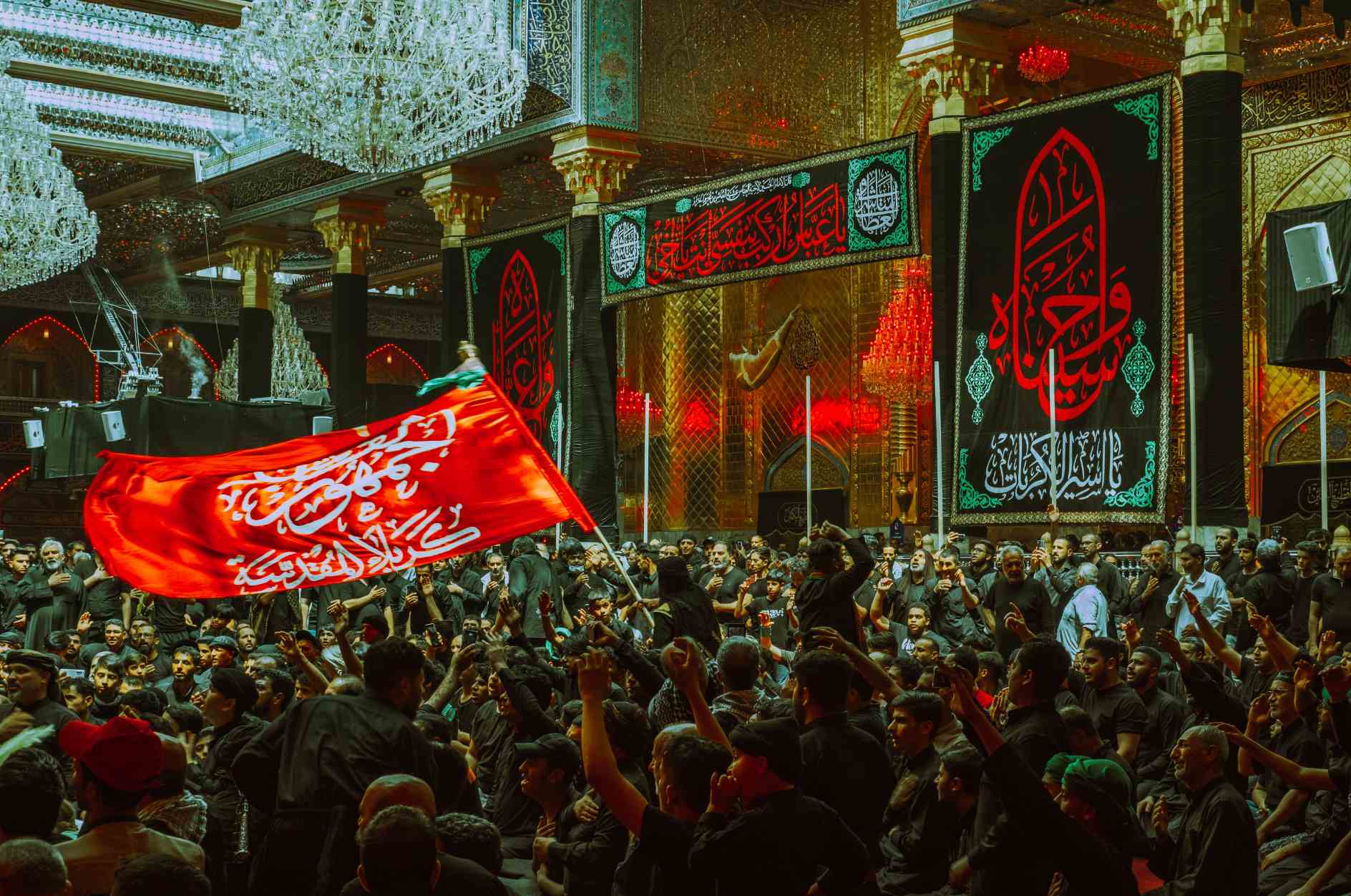
Arbaeen is one of the most powerful and emotional days in Shia Islam. For many people, it is not just a date on the calendar. It is a moment of grief, loyalty, memory, and love.
Every year, millions of Shia Muslims walk to Karbala, the city where Imam Husayn ibn Ali was martyred. Some come from nearby towns. Others travel across countries and even cross borders on foot. They walk with tired feet, full hearts, and one clear purpose: to remember Imam Husayn and renew their bond with the message of Karbala.
But what exactly is Arbaeen? Why is it called Arbaeen? And why do so many people choose to walk instead of simply arrive by car or bus?
Let’s look at it step by step.
What Does Arbaeen Mean?
The word أربعين (Arbaeen) means forty in Arabic.
In Islamic tradition, the number forty often carries a sense of completion and maturity. Arbaeen refers to the 40th day after Ashura, the day when Imam Husayn was martyred in Karbala.
Ashura was a day of tragedy. Imam Husayn, the grandson of Prophet Muhammad, stood against oppression and refused to give loyalty to a corrupt ruler. He was killed along with his family and companions. Forty days later, Muslims remember that sacrifice again. That remembrance is called Arbaeen.
So Arbaeen is not just “forty days later.” It is a day when grief turns into remembrance, and remembrance turns into commitment.
Why Is Karbala So Important?
Karbala is important because it is the place where Imam Husayn made his final stand for truth, justice, and dignity.
For Shia Muslims, Karbala is not only a historical location. It is a symbol. It represents the difference between justice and tyranny, loyalty and betrayal, truth and falsehood.
When people walk to Karbala on Arbaeen, they are not only travelling to a city. They are travelling toward a message. They are saying, in their own way, that the cause of Husayn is still alive.
What Is the Arbaeen Walk?
The Arbaeen walk is a pilgrimage on foot to the shrine of Imam Husayn in Karbala.
For many pilgrims, walking is part of the meaning. It shows humility, love, and willingness to sacrifice comfort for remembrance. A person who walks long distances is not simply visiting. He or she is making a personal offering of effort and time.
Imagine a student who really respects a great teacher. If that student only sends a message, it is respectful. But if the student travels for hours just to say thank you in person, the respect feels deeper. In a similar way, the Arbaeen walk is a physical expression of inner love.
Why Do Millions Walk?
There is no single reason. The beauty of Arbaeen is that it brings together many feelings at once.
- To remember Imam Husayn
At the heart of Arbaeen is remembrance. Imam Husayn’s sacrifice is not treated as a forgotten event. It is kept alive in the hearts of believers.
- To show loyalty
The pilgrim does not walk as a tourist. He walks as someone who belongs to the message of Karbala. The spirit of the pilgrimage is one of loyalty to the Ahl al-Bayt, the family of the Prophet.
The well-known wording of Ziyarat Arbaeen includes this meaning clearly:
Ziyarat Arbaeen«Arabic:
«وَ اَمْرِی لِاَمْرِکُمْ تَبَعٌ، وَ نُصْرَتی لَکُمْ مُعَدَّهٌ، حَتّی یَاْذَنَ اللَّهُ لَکُمْ، فَمَعَکُمْ مَعَکُمْ لا مَعَ عَدُوِّکُمْ»
Transliteration:
Wa amrī li-amrikum taba‘un, wa nuṣratī lakum mu‘adda, ḥattā ya’dhana Allāhu lakum, fa ma‘akum ma‘akum lā ma‘a ‘aduwwikum.
Meaning:
“My matter follows your matter, and my help is ready for you until Allah gives permission. I am with you, with you, and not with your enemies.”
This is not just a sentence. It is a declaration. It means: “I stand with your path. I reject oppression. I choose your side.”
- To renew the spirit of sacrifice
A person who walks to Karbala often leaves behind comfort, sleep, and ease. That sacrifice itself has meaning. It mirrors, in a small human way, the larger sacrifice of Imam Husayn and his companions.
- To feel unity
Arbaeen gathers people from different countries, languages, and cultures. Rich and poor walk together. Young and old walk together. This unity is part of the beauty of the event.
- To turn grief into action
Some people grieve silently. Others turn grief into movement. The walk to Karbala is grief in motion. It says, “We do not forget.”
Is Walking to Karbala Just a Ritual?
Not in the deeper Shia understanding.
The provided texts emphasise that ziyārah (Ziyarat)—meaning visiting sacred graves or shrines—is not meant to be a mindless action. It should be done with awareness, understanding, and spiritual purpose.
زیارت (Ziyarat) means visitation. In Shia Islam, it refers to visiting the graves of the righteous, especially the Imams, to remember them, learn from them, and renew one’s connection to their path.
That means the walk is not only about legs and distance. It is about the heart.
A person may walk hundreds of kilometres, but if the heart is empty, the journey loses much of its meaning. Another person may walk with a simple bag, a tired body, and tears in the eyes, but with a heart full of love and awareness. In Shia spirituality, that second walk carries great value.
What Is the Spiritual Meaning of Arbaeen?
Arbaeen teaches several important lessons.
- Truth may be lonely, but it does not die
Imam Husayn stood with very few supporters. By worldly standards, his camp was small. But his message survived. Arbaeen proves that truth does not disappear just because oppression becomes strong.
- Love is shown through action
It is easy to say, “I love Imam Husayn.” Arbaeen asks a harder question: what does that love cost you?
For millions of people, the answer is simple. It costs time, energy, patience, and comfort. That is why the walk feels so meaningful.
- The believer should be awake
The texts also stress معرفة (Ma‘rifah), meaning deep understanding or insight.
This is important. A pilgrim should not visit Karbala only with emotions. He should also understand why Karbala matters. Love without understanding can fade. But love with knowledge becomes strong.
What Does the Quran Say About Sacred Places?
The Quran does not mention the Arbaeen walk by name, but it does speak about sacred spaces and security.
One important verse is:
وَإِذْ جَعَلْنَا الْبَيْتَ مَثَابَةً لِّلنَّاسِ وَأَمْنًا
Transliteration: Wa idh ja‘alnā al-bayta mathābatan lilnnāsi wa amnā.
Meaning: “And [remember] when We made the House a place of return for the people and a place of security.” (Quran 2:125)
— Quran 2:125
This verse speaks about the sacred House in Makkah, but the deeper idea is important: Allah makes sacred places a source of peace, reflection, and return. In the same spirit, Shia Muslims treat the shrines of the Imams as places of spiritual refuge and remembrance.
Why Is Arbaeen More Than a Sad Day?
At first glance, Arbaeen may look like a day of mourning. And yes, grief is part of it.
But Arbaeen is not only sadness. It is also hope.
Why?
Because Imam Husayn’s sacrifice did not end in defeat. His message grew stronger over time. Arbaeen shows that injustice may win a battle, but truth can win hearts for centuries.
That is why the event feels alive. It is not frozen in the past. It speaks to the present.
What Does the Walk Teach a Young Person?
For a young reader, Arbaeen may raise a simple question: why would anyone walk so far for someone who lived 1,400 years ago?
The answer is actually easy to understand.
People walk for things they love.
A fan travels to see a hero.
A child walks a long way to meet a parent.
A student walks far for a teacher they respect.
The Arbaeen walk is the same kind of human feeling, but on a spiritual level. The pilgrims are saying, “Imam Husayn matters to me. His stand against injustice still guides my life.”
Common Questions About Arbaeen
Is Arbaeen only for Shia Muslims?
Arbaeen is most strongly observed by Shia Muslims, but people from many backgrounds may take part, visit, or respect the event.
Do all pilgrims walk the whole way?
No. Some walk long distances, some walk only part of the route, and some travel by other means before joining the walk. The key point is the intention and the spirit of ziyarat.
Is the walk only about mourning?
No. Mourning is part of it, but so are loyalty, remembrance, unity, sacrifice, and spiritual renewal.
Why is Karbala visited so much?
Because Karbala is linked with Imam Husayn’s sacrifice. For believers, visiting it is a way to renew faith and remember the stand he made for truth.
What is the main message of Arbaeen?
The main message is that truth, justice, and loyalty to Allah’s cause should never be forgotten.
Final Thoughts
Arbaeen is a day of memory, love, and devotion. It marks forty days after the martyrdom of Imam Husayn, but its meaning reaches far beyond a date on the calendar.
The walk to Karbala is not just a journey across land. It is a journey of the heart. It tells the world that Karbala is still alive in the conscience of millions. It reminds believers that truth deserves sacrifice, justice deserves loyalty, and oppression should never be accepted quietly.
That is why millions walk.
They walk to remember.
They walk to belong.
They walk to say: we are with Husayn.