
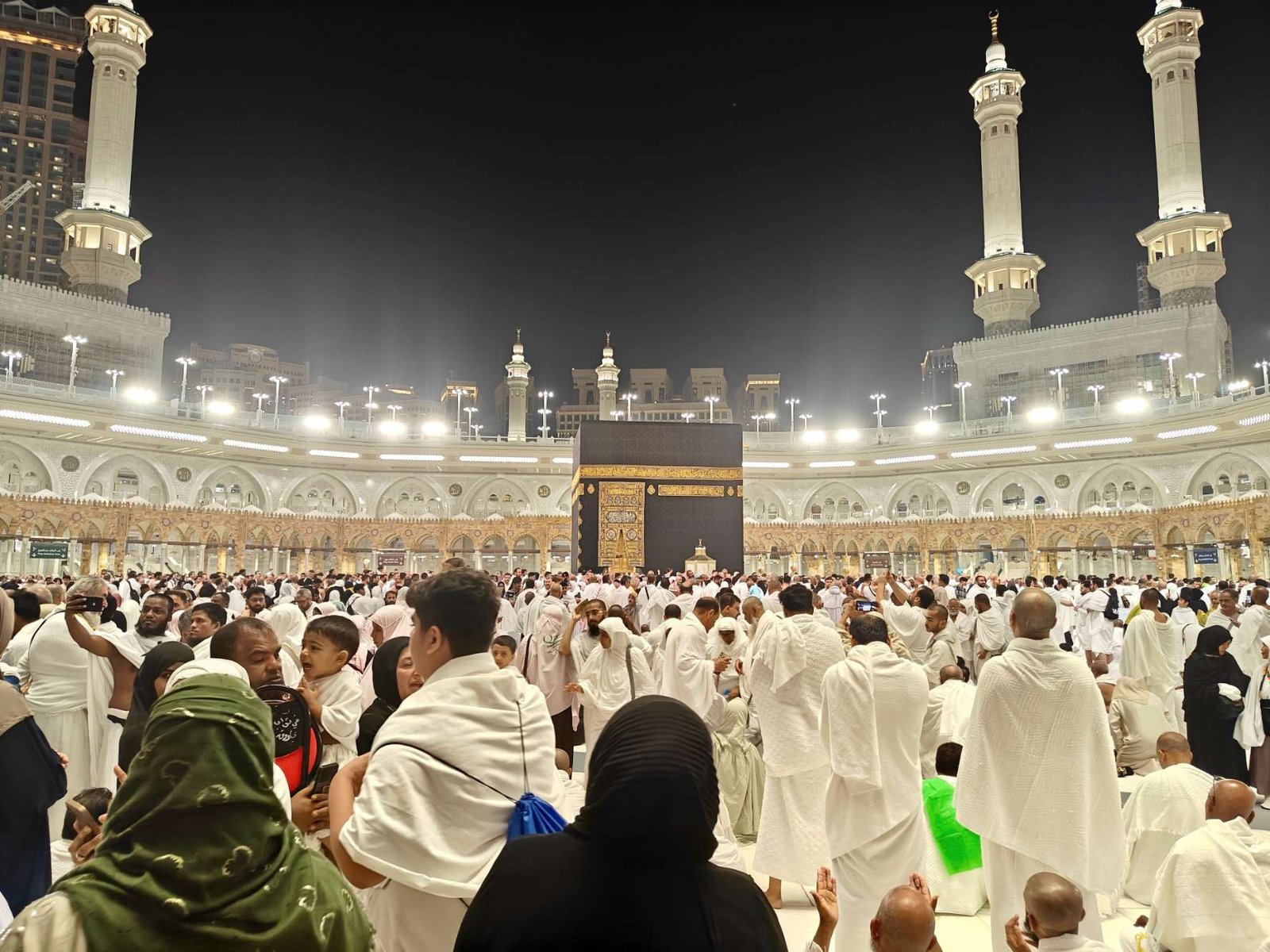
Maghrib prayer is the evening prayer in Islam. In Shia Islam, it is an obligatory prayer made up of three rak'ats and performed after sunset, once the eastern redness in the sky has disappeared.
For someone learning how Shia Muslims pray, Maghrib is one of the easiest daily prayers to recognize because it has three rak'ats rather than four. But there are still important details to understand, including its prayer time, what is recited in each rak'at, the role of Qunut, the final Tashahhud and Salam, and the rules surrounding combining Maghrib with Isha.
This guide explains what Maghrib prayer is, when it begins, how to pray it step by step, and the main Shia rules surrounding it.
What Is Maghrib Prayer?
Maghrib (مغرب) is the obligatory evening prayer performed after sunset.
Like the other daily prayers, it is a structured act of worship involving Quranic recitation, bowing, prostration, remembrance of Allah, and sitting for the Tashahhud.
The main difference you will notice is the number of rak'ats:
| Prayer | Rak'ats |
|---|---|
| Dhuhr | 4 |
| Asr | 4 |
| Maghrib | 3 |
| Isha | 4 |
So, how do you recognize Maghrib immediately?
It is the three-rak'at obligatory evening prayer.
Why Is Maghrib Prayer Important?
Maghrib is obligatory, but its importance goes beyond simply completing a daily duty.
The research describes prayer as a fundamental pillar of Islam. It is also described as one of the greatest acts of worship after knowing Allah.
Imam Sadiq (AS) said:
«"After knowing Allah, I know of nothing better than this prayer."»
This gives prayer a central place in the believer's relationship with Allah.
The research also teaches that prayer is closely connected with remembrance, purification, and piety. It is not merely a physical routine. The believer stands before Allah, remembers Him, and turns away from the distractions of everyday life.
When Does Maghrib Prayer Time Begin?
This is one of the most important points for someone learning Shia prayer.
According to Shia jurisprudence, Maghrib prayer time officially begins when the eastern redness in the sky disappears.
This is slightly different from the way Sunni schools generally define the beginning of Maghrib. Sunni practice generally places the beginning of Maghrib immediately after the sun's disk has set.
For a Shia Muslim, sunset itself does not mark the official beginning according to the timing described in the research. The eastern redness must disappear.
Why Does This Matter?
Imagine the sun has just gone below the horizon. A person might immediately think:
«"The sun has set, so it must be time for Maghrib."»
In Shia jurisprudence, you wait until the specified sign has appeared—the disappearance of the eastern redness.
That distinction is one of the best-known differences between Shia and Sunni prayer timing.
Can Shia Muslims Combine Maghrib and Isha?
Yes.
Shia jurisprudence permits Jam' (جمع), meaning combining prayers, and the research states that Maghrib and Isha share the prayer timeframe from sunset until midnight.
This means a Shia Muslim may pray Maghrib and Isha one after the other during that shared period.
The historical basis described in the research is connected to the practice of Prophet Muhammad (PBUH), who combined prayers in Medina without fear or rain in order to make the religion easier for his Ummah.
So when you see a Shia Muslim performing Maghrib and Isha together, it does not mean that one of the prayers has been skipped. Both prayers are performed; they are simply performed consecutively within their shared timeframe.
How Many Rak'ats Is Maghrib Prayer?
Maghrib prayer consists of exactly three rak'ats.
A rak'at is one complete unit of prayer.
The first two rak'ats contain the recitation of Surah Al-Fatihah and another complete Surah. The third rak'at is different: the worshipper may recite Surah Al-Fatihah alone or the Tasbihat Arba'ah.
The prayer ends after the second prostration of the third rak'at with the final Tashahhud and Salam.
What Do You Need Before Starting Maghrib Prayer?
The research identifies seven prerequisites, known as Muqaddamat (مقدمات).
These are the preparations that must be in place before beginning the prayer.
1. Ritual Purity
You must be free from ritual impurity, known as Hadath.
This is achieved through:
- Wudu
- Ghusl
- Tayammum, when applicable
2. Physical Purity
Your body and clothing must be free from physical impurities, known as Khabath, such as blood or urine.
3. Correct Prayer Time
The prayer must be performed during its prescribed timeframe.
For Maghrib, the relevant beginning is the disappearance of the eastern redness.
4. Proper Clothing
The body must be properly covered according to the requirements of prayer.
5. A Permissible Place
The place where you pray must be permissible and not usurped.
6. Facing the Qiblah
You must face the Qiblah, the direction of the Kaaba in Mecca.
7. Intention
You must have a sincere Niyyah (نية), or intention, to pray Maghrib for the sake of Allah.
The intention does not need to be a long speech. It is an internal decision to perform the prayer for Allah.
Should You Recite Adhan and Iqamah?
According to the research, reciting Adhan and Iqamah before prayer is recommended.
The dossier describes:
- Adhan as 18 phrases
- Iqamah as 17 phrases
They prepare the worshipper for prayer and announce the beginning of worship.
The research also discusses the third testimony:
«Ashhadu anna Aliyyan waliyyullah»
Some Shia scholars consider this highly recommended as an expression of faith, but they explicitly state that it is not an official part of the Adhan or Iqamah.
In other words, it should not be recited with the belief that it is a required part of the original Adhan or Iqamah.
Step-by-Step: How Do Shia Muslims Pray Maghrib?
Now let's go through the prayer itself.
Step 1: Takbirat al-Ihram
Begin the prayer by saying:
الله أكبر
Allahu Akbar
Meaning:
"Allah is the Greatest."
This is called Takbirat al-Ihram (تكبيرة الإحرام).
It marks the beginning of the prayer and is a foundational part of it.
Step 2: First Rak'at — Surah Al-Fatihah and Another Surah
In the first rak'at, recite:
- Surah Al-Fatihah
- One other complete Surah
The Bismillah is considered part of the Surah and must be recited.
After the Quranic recitation, move into Ruku'.
Step 3: Ruku' — Bowing
In Ruku', bow and recite the appropriate dhikr.
The research gives the following:
سُبْحَانَ رَبِّيَ الْعَظِيمِ وَبِحَمْدِهِ
Subhana Rabbiyal-'Azimi wa bihamdih
Meaning:
"Glory be to my Lord, the Almighty, and praise belongs to Him."
After Ruku', stand completely upright before moving to the prostrations.
Step 4: Sujud — Two Prostrations
After standing upright, perform two prostrations.
Seven parts of the body must touch the ground:
- forehead
- two palms
- two knees
- two big toes
The forehead is placed on natural earth or something that grows from the earth, excluding things that are normally worn or eaten.
During Sujud, recite:
سُبْحَانَ رَبِّيَ الْأَعْلَى وَبِحَمْدِهِ
Subhana Rabbiyal-A'la wa bihamdih
Meaning:
"Glory be to my Lord, the Most High, and praise belongs to Him."
Sit completely between the two prostrations.
After the second Sujud, stand for the second rak'at.
Step 5: Second Rak'at — Recitation and Qunut
In the second rak'at, again recite:
- Surah Al-Fatihah
- one other complete Surah
Before Ruku', it is recommended to perform Qunut.
What Is Qunut?
Qunut (قنوت) is a supplication made during prayer, normally with the hands raised.
It gives the worshipper a special moment to turn directly to Allah with humility and supplication.
After Qunut, perform Ruku' and then two Sujud just as in the first rak'at.
Step 6: First Tashahhud
After the second prostration of the second rak'at, sit down and recite the Tashahhud.
The Tashahhud includes testimony to the oneness of Allah and the messengership of Prophet Muhammad (PBUH), followed by Salawat.
The essential meaning is:
«I bear witness that there is no god but Allah, He is One and has no partner, and I bear witness that Muhammad is His servant and Messenger.»
Then send blessings upon Muhammad and his family.
After Tashahhud, stand for the third rak'at.
Step 7: Third Rak'at — Al-Fatihah or Tasbihat Arba'ah
The third rak'at is where Maghrib becomes especially distinctive.
You do not recite another full Surah after Al-Fatihah as in the first two rak'ats.
Instead, you may choose one of two options:
Option 1: Surah Al-Fatihah
Recite Surah Al-Fatihah.
Option 2: Tasbihat Arba'ah
You may recite:
سُبْحَانَ اللَّهِ وَالْحَمْدُ لِلَّهِ وَلَا إِلَٰهَ إِلَّا اللَّهُ وَاللَّهُ أَكْبَرُ
Subhanallahi wal-hamdu lillahi wa la ilaha illallahu wallahu akbar
Meaning:
"Glory be to Allah, all praise belongs to Allah, there is no god but Allah, and Allah is the Greatest."
This is called Tasbihat Arba'ah (تسبيحات أربعة), meaning the Four Glorifications.
Step 8: Final Ruku' and Sujud
After the recitation of the third rak'at:
- Perform Ruku'.
- Recite its dhikr.
- Stand upright.
- Perform the first Sujud.
- Sit between the two prostrations.
- Perform the second Sujud.
After the second prostration, remain seated.
Step 9: Final Tashahhud
Now recite the Tashahhud again.
This is the final Tashahhud of Maghrib because the prayer is ending after the third rak'at.
Step 10: Salam
After the final Tashahhud, conclude the prayer with Salam.
The research gives the following wording:
السَّلَامُ عَلَيْكُمْ وَرَحْمَةُ اللَّهِ وَبَرَكَاتُهُ
As-salamu 'alaykum wa rahmatullahi wa barakatuh
Meaning:
"Peace be upon you, and the mercy of Allah and His blessings."
This concludes Maghrib prayer.
Step 11: What Should You Do After Maghrib Prayer?
After finishing the prayer, Ta'qibat (تعقيبات) are highly recommended.
Ta'qibat are supplications and remembrances recited after prayer.
One of the most important examples is the Tasbih of Fatimah al-Zahra (SA).
It consists of:
- 34 × Allahu Akbar
- 33 × Alhamdulillah
- 33 × Subhanallah
This is a beautiful way to continue remembering Allah after the formal prayer has ended.
What Invalidates Maghrib Prayer?
The research identifies several actions that can invalidate the prayer.
These include:
- intentionally speaking
- laughing out loud
- crying for worldly matters
- completely turning away from the Qiblah
- performing external actions that destroy the form of prayer
- breaking Wudu
Breaking Wudu includes things such as:
- passing wind
- urinating
- defecating
- sleeping
- losing consciousness
This is why prayer requires concentration and care.
How Does a Traveller Pray Maghrib?
There is an important point here.
A traveller who meets the required distance of 8 farsakhs shortens the 4-rak'at obligatory prayers such as Dhuhr, Asr, and Isha to 2 rak'ats.
But Maghrib is already 3 rak'ats.
Therefore, the Qasr rule does not reduce Maghrib to 2 rak'ats.
So a traveller still performs Maghrib as 3 rak'ats.
Is Congregational Maghrib Prayer Important?
Yes. Congregational prayer, or Jama'ah (جماعة), is highly recommended.
The research gives a striking description of its reward: if a congregation grows beyond ten people, all the angels together cannot record the reward for a single rak'at.
The broader lesson is clear: praying together is highly valued.
Maghrib Prayer: Shia and Sunni Differences
There are several differences between Shia and Sunni practice concerning Maghrib.
1. When Maghrib Begins
Shia: The official beginning is when the eastern redness disappears.
Sunni: Maghrib generally begins immediately after the sun's disk has completely set.
2. Combining Maghrib and Isha
Shia: Maghrib and Isha can be combined throughout their shared timeframe.
Sunni: Combining is generally restricted to specific circumstances such as travel or heavy rain, depending on the school.
3. Wudu
The research highlights a difference in the treatment of the feet during ablution.
Shia Muslims perform Masah, wiping the tops of the feet. The research connects this practice to the Arabic grammar of Qur'an 5:6.
Sunni schools generally consider washing the feet obligatory.
4. Saying "Amen" and Crossing the Arms
Shia Muslims do not cross their arms during the prayer, and the research states that saying additions such as "Amen" is considered invalidating.
These differences reflect the Shia reliance on the teachings of the Ahl al-Bayt.
Why Is Prayer So Important in Islam?
Maghrib is one prayer, but its meaning is connected to the larger purpose of Salah.
Prayer Is Remembrance
The research emphasizes that prayer is established for the remembrance of Allah.
This means prayer is intended to keep Allah present in the believer's heart throughout daily life.
Prayer Purifies
Prayer is described as removing bad deeds and replacing them with good deeds.
Prayer Builds Piety
Prayer creates awareness of Allah and helps protect a person from hidden sins.
So when a Muslim stands for Maghrib at the end of the day, the prayer is not simply marking another task as completed. It is a spiritual return to Allah.
Maghrib Prayer at a Glance
| Question | Answer |
|---|---|
| What is Maghrib? | The obligatory evening prayer |
| How many rak'ats? | 3 |
| When does it begin in Shia jurisprudence? | When the eastern redness disappears |
| Can it be combined with Isha? | Yes |
| Does Qasr reduce Maghrib? | No; it remains 3 rak'ats |
| What is recited in the first two rak'ats? | Al-Fatihah + another complete Surah |
| What is recited in the third rak'at? | Al-Fatihah alone or Tasbihat Arba'ah |
| How does it end? | Final Tashahhud and Salam |
| Recommended after prayer | Ta'qibat, especially Tasbih of Fatimah al-Zahra |
Key Takeaways
- Maghrib is the obligatory evening prayer.
- It consists of three rak'ats.
- In Shia jurisprudence, its official time begins when the eastern redness disappears.
- Maghrib and Isha may be combined within their shared timeframe.
- The first two rak'ats contain Surah Al-Fatihah and another complete Surah.
- The third rak'at contains either Surah Al-Fatihah or Tasbihat Arba'ah.
- The prayer ends with the final Tashahhud and Salam.
- A traveller does not shorten Maghrib to two rak'ats.
- The Tasbih of Fatimah al-Zahra (SA) is a highly recommended post-prayer remembrance.
Conclusion
So, how do Shia Muslims pray Maghrib?
They perform a three-rak'at obligatory evening prayer, beginning after the disappearance of the eastern redness. The first two rak'ats include Al-Fatihah and another Surah, while the third uses either Al-Fatihah or Tasbihat Arba'ah. The prayer includes Ruku', two Sujud in each rak'at, Qunut in the second rak'at, Tashahhud, and finally Salam.
But Maghrib is more than a sequence of movements.
It is a moment at the close of the day to stop, remember Allah, ask for His help, and renew the connection between the believer and the Creator.
For someone new to Shia Islam, understanding these steps is a good beginning. The deeper purpose is remembering why the prayer is performed in the first place: to worship Allah and keep His remembrance alive in the heart.
Frequently Asked Questions
Shia Maghrib prayer has three rak'ats.
According to the research, Shia Maghrib begins when the eastern redness in the sky disappears.
Yes. Shia jurisprudence permits combining Maghrib and Isha within their shared timeframe.
No. Maghrib remains three rak'ats. Qasr applies to the four-rak'at obligatory prayers.
The worshipper may recite Surah Al-Fatihah alone or Tasbihat Arba'ah.
Yes. Qunut is recommended in the second rak'at before Ruku'.
It is a highly recommended remembrance after prayer consisting of 34 Allahu Akbar, 33 Alhamdulillah, and 33 Subhanallah.
Yes. Congregational prayer is highly recommended, and the research emphasizes the great reward associated with Jama'ah.