
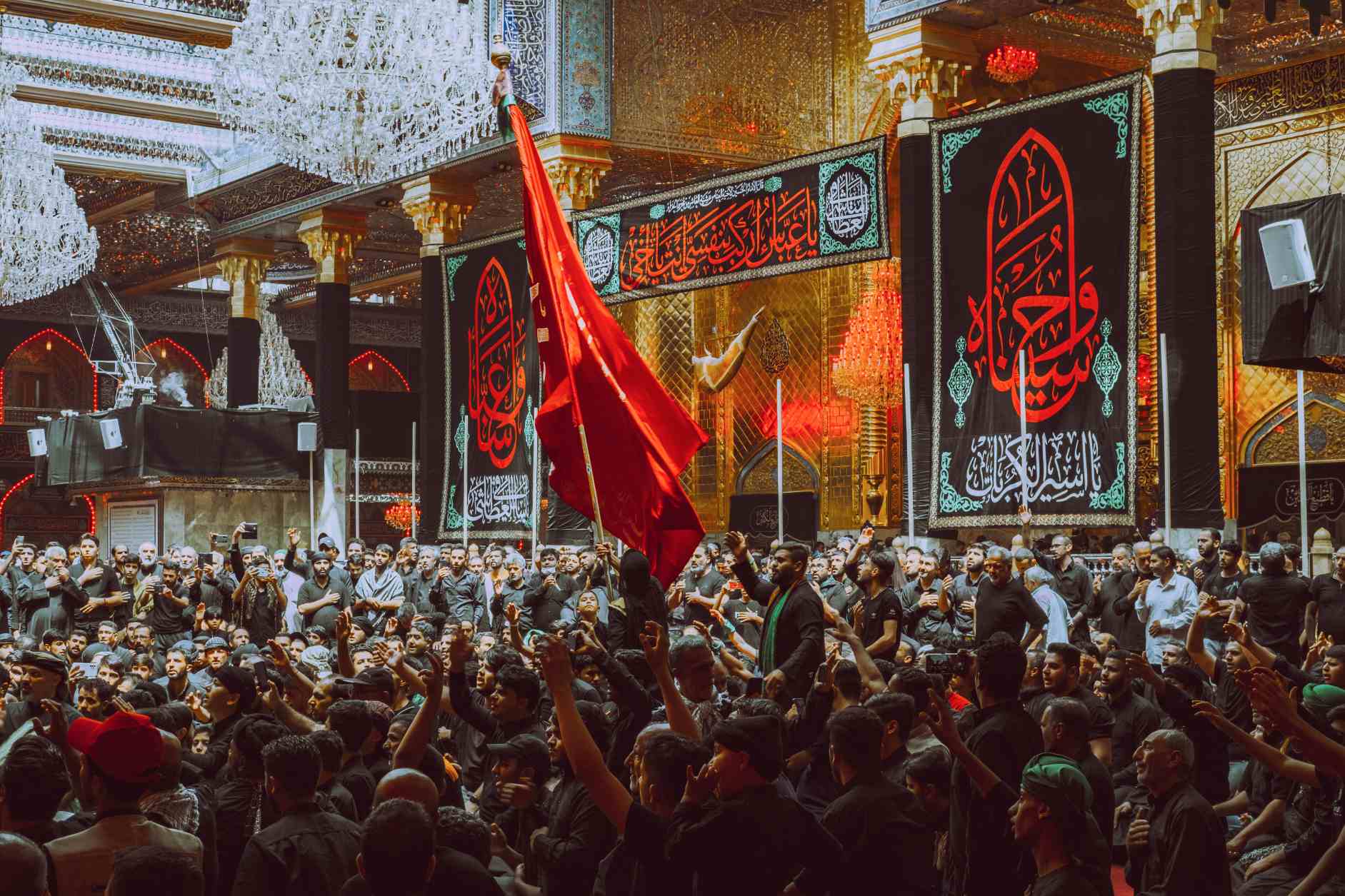
Imam Husayn (a.s.) is one of the most important figures in Islamic history. He was not only the grandson of Prophet Muhammad (S) but also the son of Imam Ali and Lady Fatimah al-Zahra. In the research dossier, he appears as a man of courage, worship, dignity, and deep love for truth.
But who was he, really?
He was the person who stood against injustice even when the price was his own life. He was the Imam who refused to give loyalty to a ruler he did not accept. He was the man whose story became forever linked with Karbala, Ashura, sacrifice, and hope. For Shia Muslims, Imam Husayn is not just a historical figure. He is a living example of how to stand firm when truth is under attack.
Key Facts About Imam Husayn
| Fact | Details |
|---|---|
| Father | Imam Ali, Amir al-Muminin |
| Mother | Lady Fatimah al-Zahra |
| Grandfather | Prophet Muhammad (S) |
| Siblings | Imam al-Hasan, Lady Zaynab, Lady Ummu-Kulthum, and al-Muhsin |
| Known for | Courage, piety, nobility, and sacrifice |
| Most famous event | Karbala and the tragedy of Ashura |
| Main legacy | Defending truth and exposing tyranny |
Imam Husayn’s Family and Early Life
Imam Husayn grew up in the household of the Prophet Muhammad (S), which means he was raised in a home filled with love, purity, and spiritual care. The dossier describes his early life as one of immense affection and delight.
This matters because a child does not grow in a vacuum. A person’s character is often shaped by the environment around them. Imam Husayn was surrounded by some of the noblest people in Islamic history: his father Imam Ali, his mother Lady Fatimah, and his grandfather the Prophet himself.
The Prophet’s affection for Imam Husayn was not hidden. In the research dossier, the Prophet openly expressed his love for Imam Husayn and Imam al-Hasan, saying, “These two are my only basils that I take from this world.” That is a tender and powerful statement. It shows how dear the two grandsons were to him.
For a beginner, this is important to understand: Imam Husayn was not a distant historical name. He was raised in the very heart of the Prophet’s family, in a home where faith and character were lived every day.
Titles of Imam Husayn and What They Mean
Imam Husayn is known by several titles in the dossier. Each one highlights a different part of his personality and his role in history.
| Title | Simple meaning |
|---|---|
| Chief of the Youth of Paradise | A title given by Prophet Muhammad (S) to Imam al-Hasan and Imam al-Husayn |
| Master of the Martyrs | He became the greatest example of sacrifice and martyrdom |
| The Oppressed (al-Mazlum) | He suffered grave injustice |
| Basil of the Prophet (Rayhanat Rasul Allah) | He was cherished and beloved by the Prophet |
These titles are not just decoration. They help the reader understand how Imam Husayn was seen by those around him and by later generations. Some titles show love. Some show sorrow. Some show his noble rank. Together, they paint a complete picture of a man deeply honored and deeply tested.
The Character of Imam Husayn
Courage and Bravery
One of the strongest themes in the dossier is Imam Husayn’s bravery. He did not collapse when danger grew. He did not surrender simply because the enemy was larger or stronger.
The dossier says that on Ashura, even after terrible losses, he showed no weakness. It also reports that he single-handedly attacked thirty thousand soldiers and forced them to retreat in panic.
Whether the reader focuses on the exact number or simply the meaning of the report, the message is clear: Imam Husayn was fearless in the face of overwhelming power.
Steadfastness
Steadfastness means staying firm when pressure tries to break you. Imam Husayn is described as standing like an unshakable mountain. He knew what was ahead. He could see the danger. Yet he did not bow to tyranny.
That is one reason his story continues to move hearts. He was not fighting for personal gain. He was defending principles.
Compassion and Nobility
Imam Husayn’s courage was never cold or cruel. The dossier also shows his mercy.
When he met the vanguard of the Umayyad army led by al-Hurr and found them dying of thirst in the desert, he felt pity for them. He ordered his companions to give water not only to the soldiers but also to their horses.
This is a striking moment. Even while standing in conflict, he did not lose his humanity. He cared for the thirsty, even when they were part of the opposing side.
Piety and Devotion
Imam Husayn was not only brave in battle. He was deeply devoted to Allah.
On the night before Ashura, he asked for a delay in the battle because he loved to pray, recite the Holy Book, and make supplication. That detail matters a lot. It shows that worship was not separate from his life. It was the center of it.
For many people, prayer is something they do when life is calm. Imam Husayn turned to prayer at the very edge of tragedy.
Respect for Family
The dossier also highlights his respectful relationship with Lady Zaynab, his sister. He would stand up when she visited him as a sign of reverence, and he sought her counsel in his affairs.
This tells us something beautiful about his character. Imam Husayn was not only a leader in public life. He was also gentle, respectful, and thoughtful in the home.
Imam Husayn and Prophet Muhammad (S)
The connection between Imam Husayn and Prophet Muhammad (S) is one of the strongest themes in the dossier.
One of the most famous statements quoted there is:
"Husayn is from me and I am from Husayn."
— Prophet Muhammad (S)
That sentence is short, but its meaning is huge.
It shows a bond that is not only family-based but spiritual and historical. Imam Husayn came from the Prophet’s family, but the Prophet also linked his own message and legacy to Imam Husayn’s future sacrifice.
Quranic Connections of Imam Husayn
The dossier connects Imam Husayn to two important Quranic events.
The Verse of Purity
The dossier cites Surah Al-Ahzab, 33:33:
إِنَّمَا يُرِيدُ اللَّهُ لِيُذْهِبَ عَنكُمُ الرِّجْسَ أَهْلَ الْبَيْتِ وَيُطَهِّرَكُمْ تَطْهِيرًا
"Allah only desires to keep away the uncleanness from you, O people of the House! and to purify you a thorough purifying."
Surah Al-Ahzab (33:33)
According to the dossier, Imam Husayn was gathered under a cloak by the Prophet, along with Imam Ali, Lady Fatimah, and Imam al-Hasan, when this verse was revealed. This marked them uniquely as the Ahl al-Bayt, meaning the People of the House.
In simple English, this verse is about purity and honor. It places special attention on the Prophet’s household.
The Verse of Mubahalah
The dossier also cites Surah Al Imran, 3:61:
فَمَنْ حَآجَّكَ فِيهِ مِن بَعْدِ مَا جَاءَكَ مِنَ الْعِلْمِ فَقُلْ تَعَالَوْا نَدْعُ أَبْنَاءَنَا وَأَبْنَاءَكُمْ وَنِسَاءَنَا وَنِسَاءَكُمْ وَأَنفُسَنَا وَأَنفُسَكُمْ
"If any one disputes in this matter with thee, now after (full) knowledge Hath come to thee, say: 'Come! Let us gather together, - our sons and your sons, our women and your women, ourselves and yourselves...'"
Surah Al Imran (3:61)
The dossier says the Prophet brought Imam Ali, Lady Fatimah, Imam al-Hasan, and Imam al-Husayn to the spiritual contest against the Christians of Najran. This showed that Imam al-Hasan and Imam al-Husayn were recognized as the Prophet’s "sons."
For a beginner, the main point is simple: the Quranic events in the dossier present Imam Husayn as a central part of the Prophet’s closest family.
The Divine Pool
The dossier also reports that the Prophet said his household and those who hold fast to them will join him at the Divine Pool on the Day of Resurrection.
This connects loyalty to the Ahl al-Bayt with spiritual success in the hereafter.
The Road to Karbala
The story of Imam Husayn’s final journey is one of the most important historical sequences in Shia Islam.
After Muawiyah’s Death
After Muawiyah died, Yazid demanded allegiance. The dossier says he instructed the governor of Medina, al-Walid, to secure Imam Husayn’s homage or behead him.
Imam Husayn refused. He did not see Yazid as fit to lead. The dossier reports that he described Yazid as a lecherous, intoxicated man and declared that someone of his standing could never pay homage to such a ruler.
This was not a small political disagreement. It was a moral stand.
Leaving Medina
Before leaving Medina, the dossier says Imam Husayn visited the Prophet’s tomb to complain to Allah and declared that he intended to "enjoin what is good and forbid what is evil."
That phrase is important. It tells us why he moved. He was not seeking comfort or power. He was acting because he believed truth had to be defended.
Staying in Mecca
He then went to Mecca and stayed there. The people of Kufa sent him thousands of messages urging him to lead a revolution against the Umayyads. In response, he sent his cousin Muslim ibn Aqil to assess the situation.
This shows that Imam Husayn did not act blindly. He considered the situation carefully and sent someone to verify it.
Journey to Iraq
Later, fearing assassination by the ruling authorities, he left Mecca on the 8th of Dhul-Hijjah in the year 60 A.H.
During the journey, he was intercepted by al-Hurr’s Umayyad troops and forced to stop in the desolate desert of Karbala.
That is how the final chapter began.
Karbala and Ashura
Karbala is the name that has become forever linked with Imam Husayn’s sacrifice.
According to the dossier, his camp was surrounded by a massive army and deprived of water for three days. On the 10th of Muharram, known as Ashura, battle began after all peace attempts were rejected.
The losses were heartbreaking. The dossier says he witnessed the slaughter of his loyal companions, his brother al-Abbas, his son Ali al-Akbar, and his six-month-old baby, Abdullah.
By the time he stood completely alone, the story had moved beyond politics. It had become a test of faith, patience, and loyalty to truth.
A Simple Timeline of the Final Journey
| Stage | What Happened |
|---|---|
| After Muawiyah's death | Yazid demanded allegiance |
| In Medina | Imam Husayn refused and rejected Yazid's rule |
| Before leaving | He visited the Prophet's tomb and declared his mission |
| In Mecca | The people of Kufa sent messages asking him to lead |
| Before Iraq | He sent Muslim ibn Aqil to check the situation |
| On the road | Al-Hurr's troops intercepted him |
| Karbala | His camp was surrounded and denied water |
| 10th Muharram | The battle of Ashura took place |
| End of the battle | Imam Husayn was martyred |
His Martyrdom
The dossier describes Imam Husayn’s martyrdom in painful detail. He fought bravely even when he stood alone. He was struck with swords, stabbed with lances, trampled by horses, and beheaded.
This is why he is remembered as the Master of the Martyrs. His death was not just an end. It became a message.
His martyrdom asked a question that still echoes today: What is life worth if truth is surrendered for comfort?
Sermons, Letters, and Supplications
The research dossier preserves several important statements from Imam Husayn.
His Response to al-Walid
When confronted by the governor of Medina, he answered with dignity. The dossier reports that he said the Prophet’s household was the core of the divine message and that Yazid was unfit to receive his loyalty.
The main point of this reply is clear: Imam Husayn did not speak like a frightened man. He spoke like someone who knew his own worth.
His Sermon at al-Bayda
The dossier also records a sermon in which he quoted the Prophet and warned against remaining silent before an unjust ruler.
This is one of the clearest moral lessons in the research. Silence in the face of wrongdoing is not treated as neutrality. It is treated as a serious failure.
His Final Supplication
The dossier gives this battlefield supplication:
"O Lord, I take patience from Your providence. There is no god save You. You are the helper of the succor-seekers. Except You, I have no other lord or deity. I take patience over Your rule."
— Imam Husayn (a.s.)
This prayer reveals the inner world of Imam Husayn at the very end. He was in pain, but not despair. He was surrounded, but not abandoned. He faced death, but his heart remained attached to Allah.
Miracles and Cosmic Impact in the Dossier
The dossier includes reports of extraordinary events connected to Imam Husayn’s martyrdom. It is important to say clearly that these are presented as reports within the source.
According to the texts, Archangel Gabriel foretold to the Prophet that Imam Husayn would be slain by the Euphrates in Karbala.
The dossier also says that after the martyrdom of Imam Husayn and his family, the earth shook, mountains swayed, oceans moved disorderly, and the heavens quivered.
It further reports that angels from the Seventh Heaven washed the martyrs’ bodies with the Water of Life, and that 100,000 angels circle Imam Husayn’s tomb daily to seek forgiveness for his visitors.
These reports underline one central idea: Imam Husayn’s sacrifice was seen not as a small local event, but as something of cosmic importance.
Why Imam Husayn Matters in Shia Islam
Imam Husayn’s importance is not limited to history books. His sacrifice shaped religious memory, moral teaching, and spiritual identity.
He Preserved Islam
The dossier says that his revolution thwarted Umayyad efforts to uproot Islam and return society to pre-Islamic customs. It also says he exposed the falsehood of Muawiyah and Yazid.
In simple English, the message is this: Imam Husayn stood up so that Islam would not be emptied of its truth.
His Tomb Became a Symbol
The dossier describes his tomb in Karbala as an everlasting symbol of freedom and perseverance. It says that even when rulers tried to erase it, it remained a loud statement against tyranny.
That is why Karbala still matters so much. It is not only a place. It is a symbol.
The Ahl al-Bayt and the Quran
The dossier also emphasizes the inseparability of the Book of Allah and the Prophet’s progeny. The Prophet’s final instructions, as described there, state that the Quran and the Ahl al-Bayt would never separate until they met him at the Divine Pool.
For Shia Muslims, this creates a strong spiritual link between revelation and the Prophet’s family.
Historical Differences Mentioned in the Dossier
The dossier also notes that some historical reports about the event of Mubahalah differ.
Report One
The first report says the participants were only Prophet Muhammad (S), Imam Ali, Lady Fatimah, Imam al-Hasan, and Imam al-Husayn.
According to the dossier, this view is supported by Sunni and Shiite scholars and by the narration of Sa’d ibn Abi-Waqqas.
Report Two
A second report says some historians omitted Imam Ali’s name entirely.
The dossier describes this as a manipulation by historians with prejudice.
Report Three
A third report claims that Aisha and Hafsah were included among the participants.
The dossier rejects this view and argues that it does not fit the wording of the event.
So, what should the reader take from this? The dossier presents the first report as the strongest and treats the other versions as disputed or altered.
Why Imam Husayn’s Story Still Speaks to People Today
Imam Husayn’s life still matters because it asks timeless questions.
What should a person do when power becomes corrupt?
Should truth be abandoned just because standing for it is difficult?
Is worship only for peaceful times, or can it guide a person through tragedy too?
Imam Husayn’s life gives a clear answer. He refused humiliation. He stayed faithful to prayer. He showed mercy even to enemies. He placed principle above comfort. And in the end, he left behind a story that still teaches courage to new generations.
Conclusion
Who was Imam Husayn?
He was the beloved grandson of Prophet Muhammad (S), the son of Imam Ali and Lady Fatimah, a man of deep devotion, rare courage, and unmatched sacrifice. He stood against tyranny, honored the Quranic message, and gave his life in Karbala rather than surrender his principles.
For Shia Muslims, Imam Husayn is a symbol of truth that never dies. His story is sorrowful, but it is also powerful. It reminds the reader that real dignity is not found in comfort. It is found in standing for what is right, even when the cost is great.
And that is why Imam Husayn’s name remains alive.
Frequently Asked Questions
Imam Husayn was the grandson of Prophet Muhammad (S), the son of Imam Ali and Lady Fatimah, and a major figure in Shia Islam.
He is important because he stood against injustice, refused loyalty to Yazid, and became the central figure of Karbala and Ashura.
He is known as the Chief of the Youth of Paradise, Master of the Martyrs, the Oppressed, and the Basil of the Prophet.
According to the dossier, Imam Husayn and his camp were surrounded, denied water, and martyred after the battle of Ashura on 10 Muharram.
The dossier links him to the Verse of Purity and the Verse of Mubahalah, showing his special place in the Prophet’s household.