
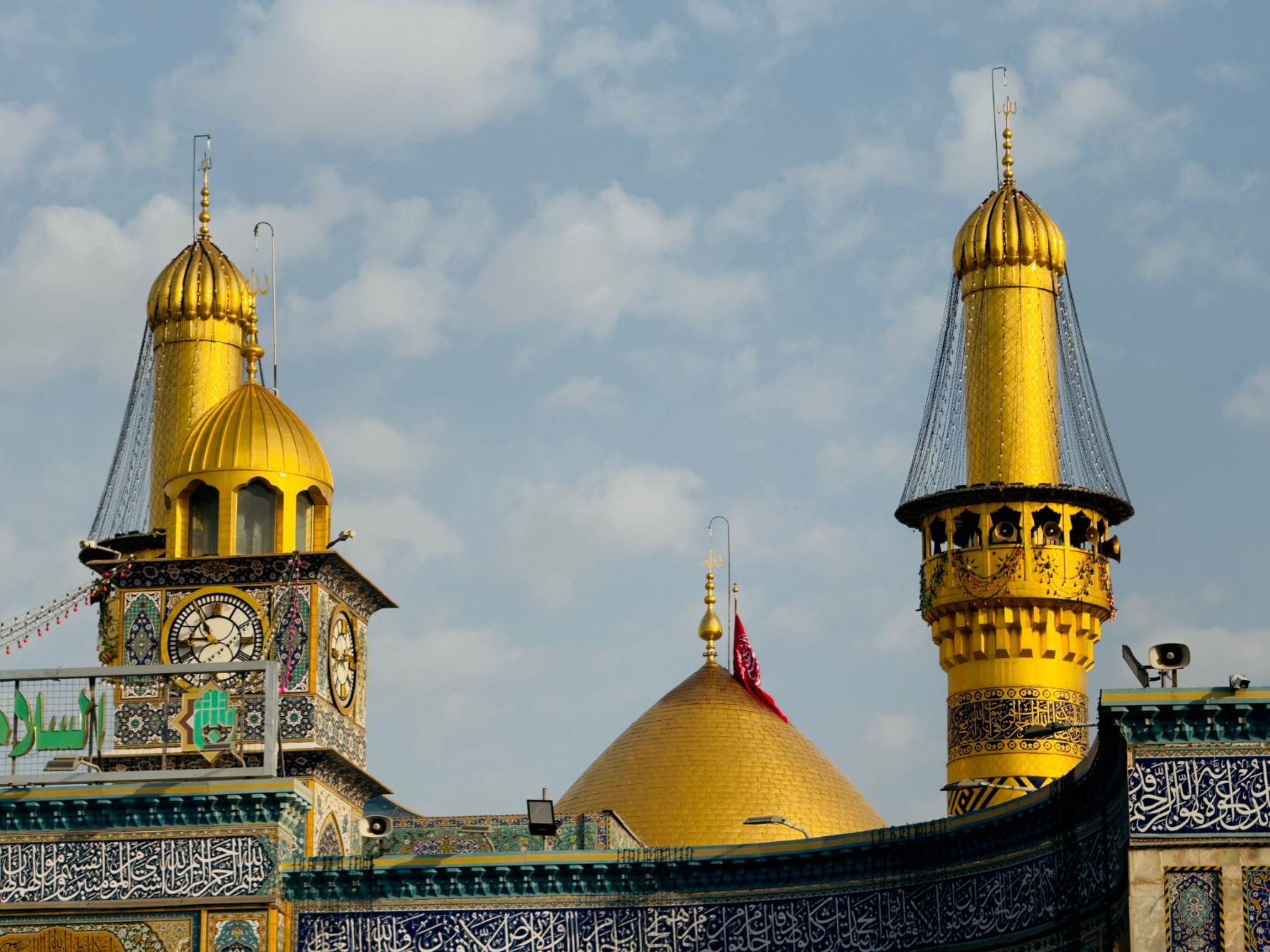
Imam Ali (a.s.) stands at the very centre of Shia Islam. He is remembered not only as the first Imam, but also as a man whose whole life reflected courage, devotion, justice, and closeness to Prophet Muhammad (S). To understand Imam Ali is to understand a key part of early Islamic history itself.
His life was not ordinary. He grew up in the Prophet’s home, accepted Islam before almost everyone else, stood beside the Prophet in the hardest moments, and later became a model of justice for generations to come. For Shia Muslims, he was more than a great companion. He was the divinely chosen leader after the Prophet, and his legacy still shapes faith, ethics, and leadership today.
Who Was Imam Ali?
Imam Ali was the son of Abu Talib and Fatimah bint Asad. He was raised in a noble family, but his real honour came from faith, character, and service. From the beginning, his life was tied to the life of Prophet Muhammad (S).
The dossier presents him as the first male to accept Islam and believe in the Prophet’s mission. It also shows that the Prophet did not simply know him as a companion. He raised him, educated him, and described him with special titles and words of affection.
In Shia Islam, Imam Ali is remembered as the first Imam. That means he was the first divinely guided leader after the Prophet, chosen to continue the path of truth, justice, and spiritual guidance.
His Family and Early Life
A household of protection and faith
Imam Ali was born into the home of Abu Talib and Fatimah bint Asad. His father, Abu Talib, is described in the dossier as the protector of Islam. He defended Prophet Muhammad (S) bravely and suffered for the religion. Because of his protection, the Prophet was able to preach his message more safely.
His mother, Fatimah bint Asad, is described as a woman of faith and purity. The dossier says she showed the Prophet extraordinary love and tenderness, even treating him more kindly than her own sons.
Raised in the Prophet’s home
A major turning point came during a famine in Mecca. To ease his uncle’s burden, Prophet Muhammad (S) took six-year-old Ali into his own home. From then on, Imam Ali grew up under the Prophet’s direct care.
The Prophet did not just feed and shelter him. He educated him deeply. According to the dossier, whenever the Prophet received revelation at night, he taught it to Ali before dawn. If revelation came during the day, he taught it before sunset. This closeness shaped Ali’s mind, faith, and character from childhood.
The Prophet also said, while taking him into his care: “I have selected the one who has been selected by God to help me.”
That one sentence says a great deal. Imam Ali’s life was not a random path. It was tied, from childhood, to a divine purpose.
The Meanings of His Titles
Imam Ali was known by many honourable titles. Each one reveals something different about his life.
| Title | Meaning |
|---|---|
| Amir al-Muminin | Commander of the faithful believers |
| Chief of the Prophets’ Successors | A leader among those who inherit the mission of the prophets |
| Leader of the Pious Ones | A guide for the deeply God-conscious |
| Head of the Worshippers | A symbol of devotion and prayer |
| Brother, Representative, and Successor of the Prophet | Titles given directly by Prophet Muhammad (S) |
These were not empty labels. They reflected how people understood his role, his piety, and his position in Islamic history.
His Character and Moral Qualities
Courage unlike any other
Imam Ali was known as the most courageous warrior in Islam. His bravery was not loud or empty. It came from faith.
The dossier says that during the Battle of Badr, he single-handedly killed half of the slain enemies, with reports mentioning either eighteen or thirty-five warriors. The exact number differs in the reports, but the main picture is clear: he was a fearless defender of Islam.
A life of pure monotheism
He is also described as someone who never worshipped idols, even from an early age. That is why the phrase karrama allahu wajhahu is associated with him, meaning that God honoured his face because it never bowed before an idol.
Justice, equality, and honesty
Imam Ali’s justice became one of the strongest parts of his legacy. As a ruler, he insisted on applying the Quran and Sunnah honestly and fairly. He did not accept special treatment for the rich or powerful. He even confiscated wealth that had been gained unlawfully and returned it to the public treasury.
He also declared equality among people, regardless of class. That made him loved by the oppressed and disliked by those who benefited from unfair privilege.
Patience and restraint
One of the most striking parts of his life was not only his strength, but also his patience. The dossier says he endured the usurpation of his rightful leadership and stayed away from political life during the reigns of the first three caliphs. He did this to avoid Muslim bloodshed and to preserve the new Islamic state.
This is important. Imam Ali was not weak. He was restrained. He chose peace over chaos when the greater good required patience.
Asceticism and generosity
He also lived simply. He rejected worldly luxury and did not chase wealth. The dossier describes him as someone who left behind no gold or silver except what he intended to use for his family—and even that, he ordered returned to the public treasury.
This was a man who lived what he believed.
His Relationship with Prophet Muhammad (S)
The first male Muslim
Imam Ali was the first male to accept Islam. That fact alone gives him a special place in Islamic history. While others hesitated, he believed.
The Prophet’s brother
The Prophet established brotherhood with Imam Ali in a unique way. Among all the companions, the Prophet said to Ali: “You are my brother.”
This was not just a polite phrase. It pointed to an exceptionally close spiritual bond.
Deep devotion and learning
Imam Ali himself described his closeness to the Prophet in moving words: “I used to follow the Prophet like a child going after his mother. He used to teach me one of his ethical virtues each day...”
That image is powerful. It shows a student who never grew tired of learning, and a teacher who shaped his follower with constant guidance.
The Prophet also said: “Ali is most certainly with the Quran and the Quran is most certainly with Ali. They shall never leave each other until they join me by the Divine Pool.”
For Shia Muslims, this statement reflects Imam Ali’s deep harmony with the Quran, both in understanding and in action.
His Marriage to Lady Fatimah
Imam Ali married Lady Fatimah (a.s.) in Medina after the Battle of Badr. Their marriage became one of the most beautiful examples of simplicity in Islamic history.
Many wealthy men wanted to marry Fatimah, but the Prophet waited for a divine decision. When Ali proposed, even though he was extremely poor, the Prophet accepted after consulting Fatimah.
The Prophet told his daughter: “I consent to your marriage with a man who is most advanced in moral aspects and adoption of Islam.”
Their wedding was simple. The ceremony, dowry, and trousseau were kept modest. That simplicity itself became a lesson for Muslim marriages: honour does not depend on extravagance.
Major Events in the Life of Imam Ali
Imam Ali’s life can be understood clearly through the major events in which he played a decisive role.
| Event | What happened |
|---|---|
| Yawm al-Dar (Day of Warning) | When the Prophet called his relatives, young Ali volunteered to support him, and the Prophet declared him his brother, representative, and successor |
| Laylat al-Mabit (Night of the Prophet’s Migration) | Ali slept in the Prophet’s bed while assassins waited outside, allowing the Prophet to migrate safely |
| Battle of Khandaq (Ahzab) | Ali killed the famous warrior Amr ibn Abd-Wudd after others hesitated |
| Conquest of Khaybar | The Prophet gave him the banner after others failed, and Ali conquered the fortress and killed Marhab |
| Conquest of Mecca | Ali climbed upon the Prophet’s shoulders to destroy the idols inside the Kaaba |
| Event of Ghadir Khumm | The Prophet publicly appointed Ali as the master of the believers |
| The Plot of Saqifah | After the Prophet’s death, others met while Ali was occupied with burial preparations |
Yawm al-Dar: the first public call
When the Prophet was ordered to warn his close relatives, he invited the sons of Abd al-Muttalib. None stepped forward to help him except Ali, who was still young. The Prophet then said: “This is my brother, my representative and my successor. Listen to obey him.”
That moment matters because it shows that Ali’s support for the Prophet began early and openly.
Laylat al-Mabit: a night of sacrifice
When enemies surrounded the Prophet’s house, Ali risked his life by sleeping in the Prophet’s bed. That single act protected the Prophet’s migration to Medina.
This was not just bravery. It was selfless trust in God.
Quranic Verses Linked to Imam Ali
1) Surah al-Baqarah (2:207)
وَمِنَ النَّاسِ مَنْ يَشْرِي نَفْسَهُ ابْتِغَاءَ مَرْضَاتِ اللَّهِ ۗ وَاللَّهُ رَءُوفٌ بِالْعِبَادِ
“And among men is he who sells himself to seek the pleasure of Allah; and Allah is Affectionate to the servants.”
— Surah al-Baqarah (2:207)
Explanation:
The dossier says this verse was revealed in honour of Imam Ali’s sacrifice on Laylat al-Mabit, when he slept in the Prophet’s bed and faced danger in the Prophet’s place.
2) Surah al-Ma’idah (5:67)
يَا أَيُّهَا الرَّسُولُ بَلِّغْ مَا أُنزِلَ إِلَيْكَ مِنْ رَبِّكَ ۖ وَإِن لَّمْ تَفْعَلْ فَمَا بَلَّغْتَ رِسَالَتَهُ...
“O Apostle! Deliver what has been revealed to you from your Lord; and if you do it not, then you have not delivered His message...”
— Surah al-Ma’idah (5:67)
Explanation:
According to the dossier, this verse was revealed at Ghadir Khumm, ordering the Prophet to announce Imam Ali as his successor.
3) Surah al-Ma’idah (5:3)
الْيَوْمَ أَكْمَلْتُ لَكُمْ دِينَكُمْ وَأَتْمَمْتُ عَلَيْكُمْ نِعْمَتِي وَرَضِيتُ لَكُمُ الْإِسْلَامَ دِينًا
“This day have I perfected for you your religion and completed My favour on you and chosen for you Islam as a religion.”
— Surah al-Ma’idah (5:3)
Explanation:
The dossier connects this verse to the proclamation at Ghadir Khumm and says it showed that Islam was completed through the succession of Imamate.
4) Surah Aal-e-Imran (3:61) — the Verse of Mubahalah
فَقُلْ تَعَالَوْا نَدْعُ أَبْنَاءَنَا وَأَبْنَاءَكُمْ وَنِسَاءَنَا وَنِسَاءَكُمْ...
“Say: Let us call our sons and your sons and our women and your women...”
— Surah Aal-e-Imran (3:61)
Explanation:
The Prophet chose only Ali, Fatimah, Hasan, and Husayn for this event. The dossier says this showed their special purity and closeness to the truth of Islam.
Important Hadiths About Imam Ali
Hadith of Ghadir
مَنْ كُنْتُ مَوْلَاهُ فَهٰذَا عَلِيٌّ مَوْلَاهُ.
اَللَّهُمَّ وَالِ مَنْ وَالَاهُ، وَعَادِ مَنْ عَادَاهُ، وَأَحِبَّ مَنْ أَحَبَّهُ، وَأَبْغِضْ مَنْ أَبْغَضَهُ، وَانْصُرْ مَنْ نَصَرَهُ، وَاخْذُلْ مَنْ خَذَلَهُ...
English translation:
“Ali shall be the master of whoever has taken me as master. O Allah, love the one who loves him, be the enemy of the one who is his enemy, support the one who supports him, and disappoint the one who disappoints him...”
Why it matters: This is one of the most important narrations in the dossier. It is tied to Ghadir Khumm and to the public announcement of Ali’s leadership.
Hadith al-Manzilah
“Your position to me is the same as Aaron’s position to Moses except that there will be no prophet after me.”
Why it matters: The Prophet said this when appointing Ali as his successor in Medina during the War of Tabuk. The comparison to Aaron and Moses highlights closeness, support, and leadership.
Hadith of the Banner at Khaybar
“Tomorrow, I will hand this banner to one who, with God’s support, will capture this castle; one who is loved by God and His Apostle and God and His Apostle love; he is not a quitter.”
Why it matters: This narration prepares the reader for Ali’s victory at Khaybar and shows why the Prophet gave him the banner after others had failed.
Hadith of the Yemen Mission
إِنْطَلِقْ فَإِنَّ اللَّهَ سَيَهْدِي قَلْبَكَ وَيُثَبِّتُ لِسَانَكَ..
English translation:
“Go ahead, for it is Allah Who shall guide your heart and strengthen your tongue.”
Why it matters: The Prophet said this when sending Ali as a judge to Yemen. It shows trust in Ali’s judgement and God’s support for his mission.
Ghadir Khumm and the Question of Succession
At Ghadir Khumm, the Prophet gathered a huge crowd of pilgrims and declared Imam Ali to be the mawla of all believers. In the dossier, mawla is understood here as master or leader.
This event is central to the Shia understanding of Imam Ali’s place after the Prophet. It is not presented as a private compliment. It is described as a public appointment.
The dossier also links this moment to the revelation of Surah al-Ma’idah 5:67 and 5:3, showing how seriously this event is treated in Shia historical memory.
After the Prophet’s Death
The dossier says that after the Prophet passed away, Imam Ali was preparing the body for burial when a group met at Saqifah to seize leadership.
Even so, Ali remained patient. He did not rush into political conflict. During the caliphates of Abu Bakr, Umar, and Uthman, he kept away from political life to preserve Muslim unity.
At the same time, the dossier notes that even Umar had to turn to him when difficult problems arose. That detail shows how widely Ali’s knowledge and judgement were respected.
The Caliphate of Imam Ali
After the assassination of Uthman, the public and the mutineers surrounded Imam Ali and insisted that he take leadership. Talhah, al-Zubayr, military forces, and the public all gave him allegiance.
His rule was marked by justice, and that justice caused resistance from some powerful people.
Battle of the Camel
Talhah, al-Zubayr, and Aisha rebelled against his justice and equality. Imam Ali defeated them and, according to the dossier, granted Aisha general amnesty to return to Medina.
Battle of Siffin
Muawiyah ibn Abu Sufyan refused peace and rebelled, while also trying to protect his own usurped fortunes. The war became long and difficult because of deceptive tactics, including raising Qurans on spears.
Battle of al-Nahrawan
A group of extremists, known as the Kharijites, turned against Imam Ali after having forced him to accept arbitration. They began killing innocent Muslims, and Ali was forced to fight them.
These events show the pain of his leadership. He was not only defending borders. He was trying to hold truth, justice, and unity together in a fractured community.
Different Historical Reports
Some details in early Islamic history are reported differently. The dossier presents several such disagreements.
1) Abu Talib’s faith
One view says Abu Talib was a believer who concealed his faith to protect the Prophet. The dossier says his poetry supports this view, and that Imam Ali strongly endorsed his father’s faith.
Another view says Abu Talib died as an unbeliever. The dossier argues that this report was politically motivated and later used to harm Imam Ali by attacking his father.
2) The participants of Mubahalah
One report says the Prophet brought only himself, Ali, Fatimah, Hasan, and Husayn.
Other reports alter the list in different ways, but the dossier says the most reliable accounts support the five-person version.
3) The breaking of the Kaaba’s idols
One report says Ali climbed on the Prophet’s shoulders during the Conquest of Mecca to break the idols inside the Kaaba.
Another says the event happened one year before the migration, at night, without the Quraysh knowing. The dossier concludes that the event may have happened on both occasions.
These differences matter because they show that historians did not always preserve every detail in the same way. Even so, the central meaning of Imam Ali’s role remains firm.
His Martyrdom, Final Advice, and Burial
Imam Ali was struck on the head with a poisoned sword by the Kharijite Abd al-Rahman ibn Muljim while praying the Fajr prayer on the 19th of Ramadan.
Before his death, he gave powerful advice to Hasan and Husayn. He told them to fear Allah, not to chase the pleasures of this world, to speak the truth, to act for reward, and to stand with the oppressed against the oppressor.
That advice sums up his whole life in one message: live with God-consciousness, truth, and justice.
After his death, Imam al-Hasan and his brothers carried his pure body in the last part of the night to its final resting place in al-Najaf.
Why Imam Ali Still Matters
Imam Ali’s legacy is not limited to history books. He remains important because he represents a complete moral vision.
He showed courage without arrogance, justice without favouritism, patience without weakness, and devotion without compromise. He was close to the Prophet, faithful to the Quran, loving toward the oppressed, and firm against injustice.
That is why his life still speaks to people today. It is not only a story of a great man. It is a story about what faith looks like when it becomes action.
For Shia Muslims, Imam Ali is the first Imam. For all readers, he is a lasting example of knowledge, sacrifice, and integrity. His life began in the house of Abu Talib, grew under the care of the Prophet, and ended in martyrdom and honour. But his legacy did not end. It continues wherever justice is defended, truth is spoken, and the memory of the Ahl al-Bayt is kept alive.
Frequently Asked Questions
Imam Ali was the son of Abu Talib and Fatimah bint Asad, the first male Muslim, and the first Imam of Shia Islam.
He is seen as the first divinely guided Imam and the rightful successor of Prophet Muhammad (S).
He is known for courage, justice, generosity, piety, patience, and deep closeness to the Quran and the Prophet.
The Prophet publicly declared Imam Ali as the mawla of the believers, which the dossier presents as an appointment of succession.
He was struck by a poisoned sword by Abd al-Rahman ibn Muljim while praying Fajr on the 19th of Ramadan.
Key Takeaways
- Imam Ali was the first male Muslim and the first Imam of Shia Islam.
- He grew up in the Prophet’s home and was deeply educated by him.
- His life was marked by courage, justice, patience, and simplicity.
- Major events like Ghadir Khumm, Khaybar, and Laylat al-Mabit shaped his legacy.
- He died as a martyr, and his words still guide believers toward truth and justice.