
Introduction
The Battle of Karbala is one of the most painful events in Islamic history. It was not just a battle between two armies. It was a clash between truth and power, loyalty and betrayal, courage and cruelty.
Why did Imam Husayn leave Mecca and head toward Kufa? What happened when his caravan was stopped in the desert? And how did one of the most tragic days in history end with the martyrdom of the grandson of Prophet Muhammad?
To understand Karbala, we must begin before the battle itself. The story starts with political oppression, broken promises, and a journey that changed Islamic history forever.
Quick Answer
The Battle of Karbala took place in 61 AH, when Imam Husayn ibn Ali and his small group of companions were trapped on the plains of Karbala by Umayyad forces. After being blocked from reaching Kufa or returning to Medina, Imam Husayn and his followers were killed on the Day of Ashura. The tragedy became one of the greatest calamities in Islamic history.
Historical Background
To understand Karbala, it helps to know the political world around it.
The conflict was deeply rooted in the long-standing enmity between the Umayyad rulers, especially the descendants of Abu Sufyan, and the family of Prophet Muhammad and Imam Ali. According to the research dossier, Muawiyah followed a harsh policy against the supporters of Imam Ali. This included officially cursing Imam Ali from the pulpits and cracking down on anyone who followed his path.
This was not a peaceful political climate. It was a system built on fear, pressure, and deception.
That is the world in which Imam Husayn was asked to move.
Why Imam Husayn Left Mecca
Imam Husayn did not leave Mecca to start a war. He moved because the people of Kufa sent him repeated letters inviting him to come and lead them. They were suffering under Umayyad persecution and promised their support.
So Imam Husayn sent his cousin and trusted emissary, Muslim bin Aqil, to Kufa to investigate the situation.
This was a careful and responsible decision. He did not act on emotion alone. He first sent a representative to check whether the promises of the people were real.
The Letters from Kufa
The people of Kufa had written many letters to Imam Husayn. They asked him to come because they believed he could lead them toward justice.
But these promises did not last.
The dossier makes one thing very clear: before Imam Husayn could arrive, the Kufans abandoned Muslim bin Aqil. Under pressure from the Umayyad authorities, fear spread quickly. Loyalty disappeared. Support collapsed.
What happened next was a turning point.
Muslim bin Aqil and the Betrayal of Kufa
Ubaydullah bin Ziyad, the Umayyad governor of Kufa, moved brutally against the supporters of Imam Husayn. He ordered the execution of Muslim bin Aqil and Hani bin Urwah, a respected Kufan supporter.
This was not just political action. It was a warning.
By killing the Imam's emissary and one of his local supporters, the Umayyad governor made clear that resistance would be crushed.
By the time Imam Husayn was on his way, the situation in Kufa had already changed.
Hurr Intercepts Imam Husayn
In 61 AH, Imam Husayn departed Mecca and traveled toward Kufa. But he never reached the city.
On the desert route, his caravan was intercepted by a 1,000-strong Umayyad vanguard led by Hurr bin Yazid al-Riyahi.
This moment changed everything.
Imam Husayn addressed the opposing force and explained that he had come only because of their letters. He also offered peace. He said that if they no longer wanted him, he was ready to return to Medina.
This was not the speech of a rebel looking for war. It was the answer of a man seeking a peaceful solution.
The Stand-Off at Karbala
Hurr had orders from Ubaydullah bin Ziyad. He physically blocked Imam Husayn's path and did not allow him to continue to Kufa. He also would not let the Imam return freely to Medina.
At one point, Hurr suggested a temporary compromise: the caravan could travel along a route that would take them to neither city until new instructions arrived.
This may sound small, but it was devastating.
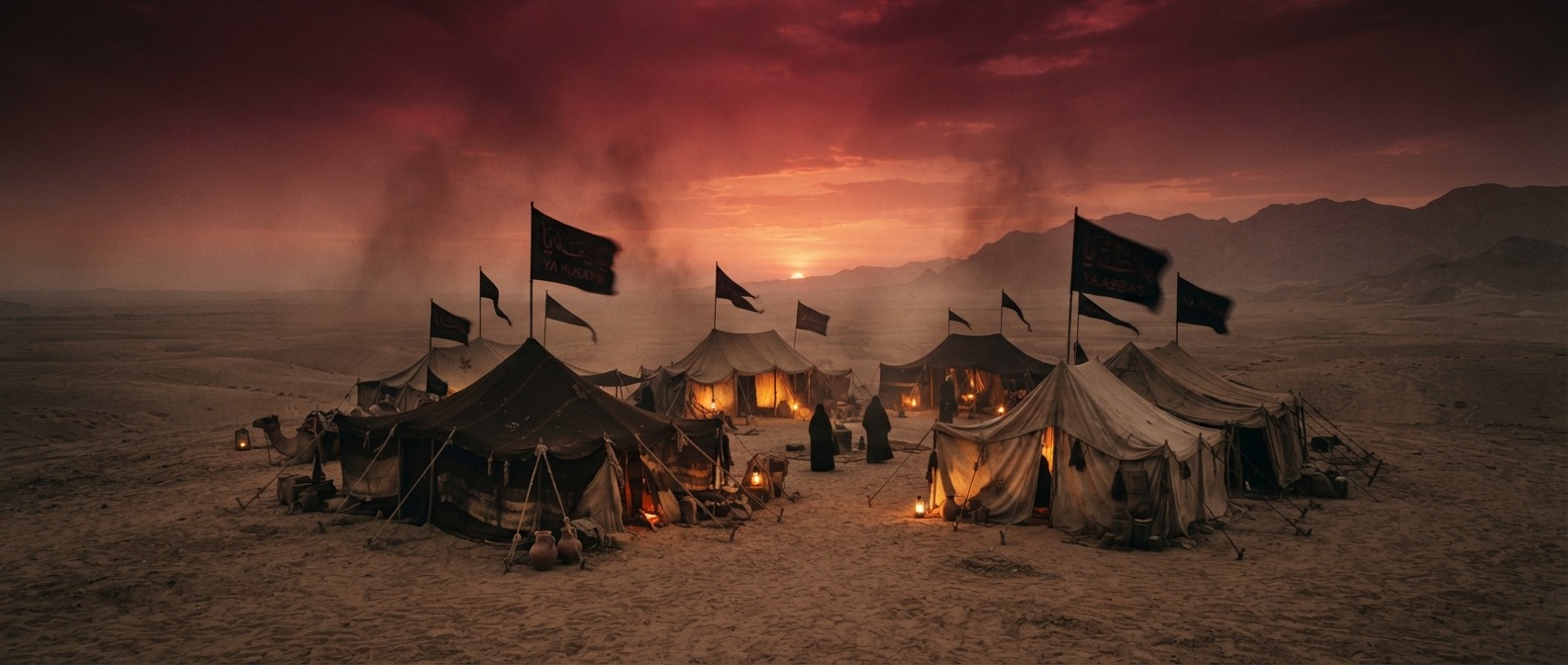
The Imam and his family were slowly pushed into isolation. The enemy forces cornered them until they were forced to stop on the desolate plains of Karbala.
And there they remained.
No city. No rescue. No easy escape.
Only the desert, the pressure, and the approaching tragedy.
What Happened on Ashura
Ashura, the 10th of Muharram, became the day of battle.
According to the dossier, several brave companions fought with remarkable courage. Abis bin Abi Shabib entered the battlefield without armor. Nafi' bin Hilal al-Jamali fought fiercely with a bow and marked arrows and killed thirteen men while reciting war poetry. Abdullah bin Muslim bin Aqil also fought and was martyred.
Then came the death of Qasim, the young nephew of Imam Husayn. He fought bravely, but he was struck on the head and martyred by Amr bin Sa'd al-Azdi.
Each martyrdom deepened the tragedy.
The Imam's small group stood against a powerful army, yet they did not surrender their dignity.
Hurr's Change of Heart
One of the most striking moments in the Karbala narrative is the defection of Hurr bin Yazid al-Riyahi.
He had helped block Imam Husayn's path, but by the morning of Ashura he realized the Umayyads intended bloodshed. He chose truth over power and joined Imam Husayn.
This moment has remained one of the clearest symbols of conscience in Islamic history.
Even after being part of the opposing force, Hurr made a moral choice when it mattered most.
The Martyrdom of Imam Husayn
The dossier focuses heavily on the events around the battle, but its central truth is unmistakable: Imam Husayn was martyred at Karbala.
He stood for truth and justice rather than aggression. He had come because of the promises sent to him. He had offered peace. But the enemy closed every door.
His death turned Karbala into a lasting symbol of sacrifice.
The Looting of the Imam's Body
After Imam Husayn was martyred, the cruelty did not stop.
The dossier states that enemies from Kufa looted his body and stripped his clothes. Qays bin Ash'ath Kindi stole the Imam's garment, called a qatifah. Malik bin Nusayr Kindi struck the Imam's head with a sword and looted his cap.
This part of the story is especially painful because it shows how far the violence went. Even after death, the body of the Imam was not spared dignity.
The Attack on the Tents
After the martyrdom of Imam Husayn, Shimr and the enemy infantry surrounded the tents.
They looted the encampment and forcefully pulled the women's coverings off.
Imam Sajjad, the son of Imam Husayn, was very ill and lying in bed during this attack. According to the dossier, Shimr's men asked whether they should kill the sick youth. Hamid bin Muslim stopped them and argued that he was only a boy.
This detail matters greatly because it shows how close the tragedy came to becoming even worse.
Imam Sajjad survived because he was ill and unable to fight. His survival became essential for what came after Karbala.
One of the most important eyewitness details about the attack on the tents comes from Hamid bin Muslim, who was present within the Umayyad army. His reporting preserves part of the historical scene, especially the survival of Imam Sajjad.
Important Historical Figures
| Figure | Role in Karbala |
|---|---|
| Imam Husayn | Grandson of Prophet Muhammad and leader of the movement for truth and justice |
| Hurr bin Yazid al-Riyahi | Commander of the Umayyad vanguard who later joined Imam Husayn |
| Ubaydullah bin Ziyad | Umayyad governor of Kufa who ordered the crackdown |
| Muslim bin Aqil | Envoy sent by Imam Husayn to Kufa |
| Hani bin Urwah | Kufan supporter executed before the Imam arrived |
| Imam Sajjad | Son of Imam Husayn who survived the massacre |
| Nafi' bin Hilal al-Jamali | Brave archer and loyal companion of Imam Husayn |
| Qasim | Imam Husayn's nephew who was martyred on Ashura |
| Abis bin Abi Shabib | Brave companion who fought without armor |
| Shimr | Umayyad commander involved in the attack on the tents |
| Hamid bin Muslim | Soldier/reporter who helped preserve key eyewitness details |
Timeline of Karbala
| Event | What Happened |
|---|---|
| Before 61 AH | Muawiyah's regime used threats and public cursing of Imam Ali to weaken the Shia movement |
| Kufa sends letters | The people of Kufa invited Imam Husayn to lead them |
| Muslim bin Aqil sent | Imam Husayn sent Muslim bin Aqil to Kufa as his emissary |
| Betrayal in Kufa | The Kufans abandoned Muslim bin Aqil |
| Muslim and Hani martyred | Ubaydullah bin Ziyad ordered their execution |
| 61 AH | Imam Husayn left Mecca toward Kufa |
| Desert interception | Hurr's 1,000-strong force stopped the caravan |
| Standoff | Imam Husayn was blocked from both Kufa and Medina |
| Karbala | The caravan was forced to stop on the plains of Karbala |
| Ashura | Fighting began and the companions were martyred |
| After martyrdom | The body of Imam Husayn was looted |
| After battle | The tents were attacked and Imam Sajjad survived |
| 236 AH | Mutawakkil ordered the destruction of Imam Husayn's grave |
| Second half of 4th century AH | Husseini mourning rituals spread widely in many regions |
A Note on Historical Names
The dossier also corrects a common later mistake found in some Maqatil texts. Some later sources call the skilled archer "Hilal bin Nafi' al-Hajjaj," but the authentic name given here is Nafi' bin Hilal al-Jamali. The dossier notes that "Hilal bin Nafi'" was a different person altogether.
This is a good reminder that not every later retelling is equally accurate.
Why Karbala Still Matters
The Battle of Karbala is remembered not only as a battle, but as a moral event.
It became one of the greatest tragedies in the Islamic world. But the story did not end with the martyrs. Over time, Husseini mourning rituals spread widely, and by the second half of the fourth century AH, Shia Muslims had become a major presence in many regions.
Even hostility toward the grave of Imam Husayn continued. In 236 AH, the Abbasid caliph Mutawakkil ordered the destruction of the grave and nearby houses, and he banned people from visiting the site.
That tells us something important: the memory of Karbala remained powerful enough to frighten rulers long after the battle itself.
Historical Lessons from Karbala
Karbala teaches several lessons that still speak to readers today.
First, promises made under fear are not always trustworthy.
Second, truth can stand even when it is outnumbered.
Third, a single moral decision can change a person's place in history, just as Hurr's choice did.
Fourth, injustice does not end a cause. In many cases, it makes the truth even harder to forget.
And finally, Karbala reminds us that history is not only about armies and rulers. It is also about conscience.
Frequently Asked Questions
It was the tragic battle in 61 AH in which Imam Husayn and his companions were killed after being trapped by Umayyad forces on the plains of Karbala.
He moved because the people of Kufa sent him many letters asking him to lead them against Umayyad oppression.
He was Imam Husayn's emissary to Kufa, sent to verify the support promised by the people there.
He was the commander who intercepted Imam Husayn but later chose to join him on the morning of Ashura.
He survived because he was severely ill and confined to bed during the attack on the tents.
No. It was also a political, moral, and spiritual tragedy rooted in oppression, betrayal, and resistance.
Because it represents sacrifice, loyalty, and the defense of truth against injustice.
Yes. The dossier says Mutawakkil ordered the destruction of Imam Husayn's grave in 236 AH, but the memory of Karbala continued to grow.
Conclusion
The Battle of Karbala was not a simple battlefield event. It was the result of long political hostility, broken promises, and brutal oppression.
Imam Husayn went forward with dignity. He offered peace. He reminded the people that he had come because of their own letters. But in the end, he and his companions were trapped, killed, and dishonored by an army acting under Umayyad power.
And yet Karbala did not disappear into silence.
It became one of the most remembered tragedies in Islamic history, a story of courage that still speaks across centuries.
Key Takeaways
- Karbala happened in 61 AH on the plains of Karbala.
- Imam Husayn went toward Kufa after receiving letters of support.
- Muslim bin Aqil was sent first, but Kufa betrayed him.
- Hurr stopped Imam Husayn's caravan before it reached Kufa.
- The caravan was forced to halt at Karbala.
- On Ashura, Imam Husayn's companions fought bravely and were martyred.
- After the martyrdom, the Imam's body was looted and the tents were attacked.
- Imam Sajjad survived because he was ill.
- Karbala became a lasting symbol of truth, sacrifice, and resistance.