
Imam Mahdi’s occultation is one of the most important beliefs in Twelve-Imam Shia Islam. It explains why the Twelfth Imam, Muhammad ibn al-Hasan al-Mahdi, is alive but hidden from public view. For many beginners, this idea can sound mysterious at first. But once you understand the background, the two phases of occultation, and the reason Shia Muslims believe in it, the picture becomes much clearer.
In simple words, Ghaybah means that the Imam is alive on Earth, but Allah has hidden him from normal public recognition until the time of his reappearance, known as Zuhur. Shia belief does not say that he was taken to another planet or another dimension. Rather, he lives among people, witnesses what happens, and remains protected by divine decree, while people do not recognize him.
Quick Answer
The occultation of Imam Mahdi has two stages:
- The Minor Occultation (Al-Ghaybah al-Sughra) lasted about 69–70 years, from 260 AH to 329 AH.
- The Major Occultation (Al-Ghaybah al-Kubra) began in 329 AH and continues until Allah allows the Imam to reappear.
The main difference between the two is communication. During the Minor Occultation, the Imam guided the community through four special deputies. During the Major Occultation, that direct representation ended, and Shia Muslims rely on qualified jurists for general religious guidance.
What Is Ghaybah?
In Shia theology, Ghaybah means the hidden life of the Twelfth Imam. He is not dead. He is not gone forever. He is alive, but hidden from ordinary public access.
A simple way to think about it is this: the Imam is present, but hidden from recognition. People may meet him without knowing who he is. Shia teaching also says that he is not a ghost-like being and not physically trapped in some strange place. He lives in the real world, within human society, but Allah places a veil over his identity.
This belief matters because the Imam is seen as the Hujjah, the divine proof of Allah on earth. In Shia thought, the world can never be without a living divine proof.
Why Did the Occultation Happen?
The dossier explains that the occultation was not random. It was a result of severe Abbasid oppression.
The Abbasid rulers knew prophetic traditions that spoke about a twelfth leader from the family of Imam Ali and Lady Fatima who would rise against tyranny. Because of that fear, they kept Imam Hasan al-Askari under strict surveillance in Samarra and watched his home closely for any sign of a child.
So the occultation also served a practical purpose: to protect the life of Imam Mahdi. If he had remained openly accessible, the rulers would likely have hunted him down and killed him, just as they had tried to do with earlier Imams.
The Minor Occultation (Al-Ghaybah al-Sughra)
The Minor Occultation began in 260 AH, after the martyrdom of Imam Hasan al-Askari, and lasted until 329 AH.
This phase is called “minor” not because it was unimportant, but because it was shorter and still included a structured way of communication. The community did not lose contact completely. Instead, the Imam appointed a special network of trusted intermediaries.
What Made This Phase Different?
During the Minor Occultation:
- the Imam did not appear publicly,
- but he still guided the Shia community indirectly,
- and he used four specific deputies to deliver his instructions.
These deputies received letters and questions from the community. People asked them about religious law, financial matters like Khums, and personal problems. The deputies then passed on the Imam’s written answers, called Tawqee.
The Four Deputies
The four special deputies are known as Nuwwab al-Arba’ah. They were:
| Deputy | Role |
|---|---|
| Uthman ibn Sa’id al-Amri | A trusted companion and agent of the 10th and 11th Imams |
| Muhammad ibn Uthman al-Amri | Son of the first deputy; served for decades |
| Al-Husayn ibn Ruh al-Nawbakhti | A highly capable scholar who managed the network under pressure |
| Ali ibn Muhammad al-Samarri | The final deputy; his death ended special representation |
These four men had one essential job: they protected the connection between the Imam and the Shia community during a dangerous historical period.
The Funeral Incident and the Beginning of Concealment
According to the dossier, when Imam Hasan al-Askari was martyred in 260 AH, his brother Jafar ibn Ali tried to lead the funeral prayer and claim the Imamate for himself. At that moment, the young Imam Mahdi appeared, pushed him back, and declared that he was more worthy to lead the prayer for his father.
After the prayer, Abbasid forces moved to raid the home. The child then entered the inner living area or cellar area of the house and disappeared from normal physical access. This event marked the beginning of the Minor Occultation.
A common misunderstanding comes from this moment. Some people wrongly imagine that Shia Muslims believe the Imam is still living in that cellar. That is not the belief. The cellar, or Sardab, was simply part of the home where he was last physically seen before the occultation. Shia scholars reject the idea that he is trapped there.
The End of the Minor Occultation
The Minor Occultation ended with a final signed decree from the Imam to the fourth deputy, Ali ibn Muhammad al-Samarri.
In that message, the Imam informed him that he would die within six days and instructed him not to appoint a successor. This closed the door to specific, direct representation.
That point is very important. It means no one after that could claim to be a special, officially appointed ambassador of the Imam in the same way as the four deputies.
The Major Occultation (Al-Ghaybah al-Kubra)
The Major Occultation began in 329 AH after the death of the fourth deputy, and it continues today.
This phase is longer, deeper, and more difficult for believers. In this period, there is no appointed direct deputy speaking on behalf of the Imam. Instead, Shia Muslims follow Niabat al-Ammah, or general deputyship.
That means qualified, just, and knowledgeable jurists guide the community in religious matters. They do not claim to see the Imam whenever they want, and they do not claim to be his personal ambassadors. Their role is to interpret religious texts carefully and preserve the practical life of the faith.
Why Does the Major Occultation Last So Long?
The dossier gives several theological reasons for the long occultation. Each one helps explain why this period continues.
- To Preserve the Divine Proof
Shia belief holds that the earth must never be empty of a living divine proof. The occultation allows the Imam to remain alive while hidden from enemies.
- To Protect His Life
Open life would have exposed him to assassination. Hidden life protects him until the right time.
- To Test Faith
The occultation is also a test. It reveals who truly believes in Allah’s plan, even when the leader is unseen.
- To Remain Free from Tyrant Rule
Earlier Imams often had to live under pressure, make defensive compromises, or face forced political realities. The occultation ensures that Imam Mahdi will reappear free from any oath or loyalty to oppressive governments.
- Because Humanity Is Not Yet Fully Ready
The long duration also reflects the lack of complete readiness among human beings. The world must reach the right level of justice, maturity, and loyalty before the final universal mission begins.
Quranic Evidence for Ghaybah
Shia exegetes often connect several Quranic verses to the reality of occultation.
Surah al-Baqarah 2:1-3
الم
ذَٰلِكَ الْكِتَابُ لَا رَيْبَ ۛ فِيهِ ۛ هُدًى لِّلْمُتَّقِينَ
الَّذِينَ يُؤْمِنُونَ بِالْغَيْبِ...
Alif, Lam, Meem. This is the Book about which there is no doubt, a guidance for those conscious of Allah. Who believe in the unseen (Ghayb)...
Shia narrations explain that the word Ghayb can include faith in the hidden Imam. Believers trust him even when they cannot see him.
Surah al-Nur 24:55
وَعَدَ اللَّهُ الَّذِينَ آمَنُوا مِنكُمْ وَعَمِلُوا الصَّالِحَاتِ لَيَسْتَخْلِفَنَّهُمْ فِي الْأَرْضِ...وَلَيُبَدِّلَنَّهُم مِّن بَعْدِ خَوْفِهِمْ أَمْنًا ۚ
And We wanted to confer favor upon those who were oppressed in the land and make them leaders and make them inheritors.
This verse is linked to the promise of security after fear. Shia scholars see the present age as an age of fear and waiting, while the reappearance of the Imam represents the full arrival of divine security.
Surah al-Qasas 28:5
وَنُرِيدُ أَن نَّمُنَّ عَلَى الَّذِينَ اسْتُضْعِفُوا فِي الْأَرْضِ وَنَجْعَلَهُمْ أَئِمَّةً وَنَجْعَلَهُمُ الْوَارِثِينَ
And We wanted to confer favor upon those who were oppressed in the land and make them leaders and make them inheritors.
Shia interpretation sees this as part of a wider divine pattern: oppression is not the final word. The oppressed are promised inheritance and victory.
Hadith Evidence
The dossier mentions several important narrations related to occultation.
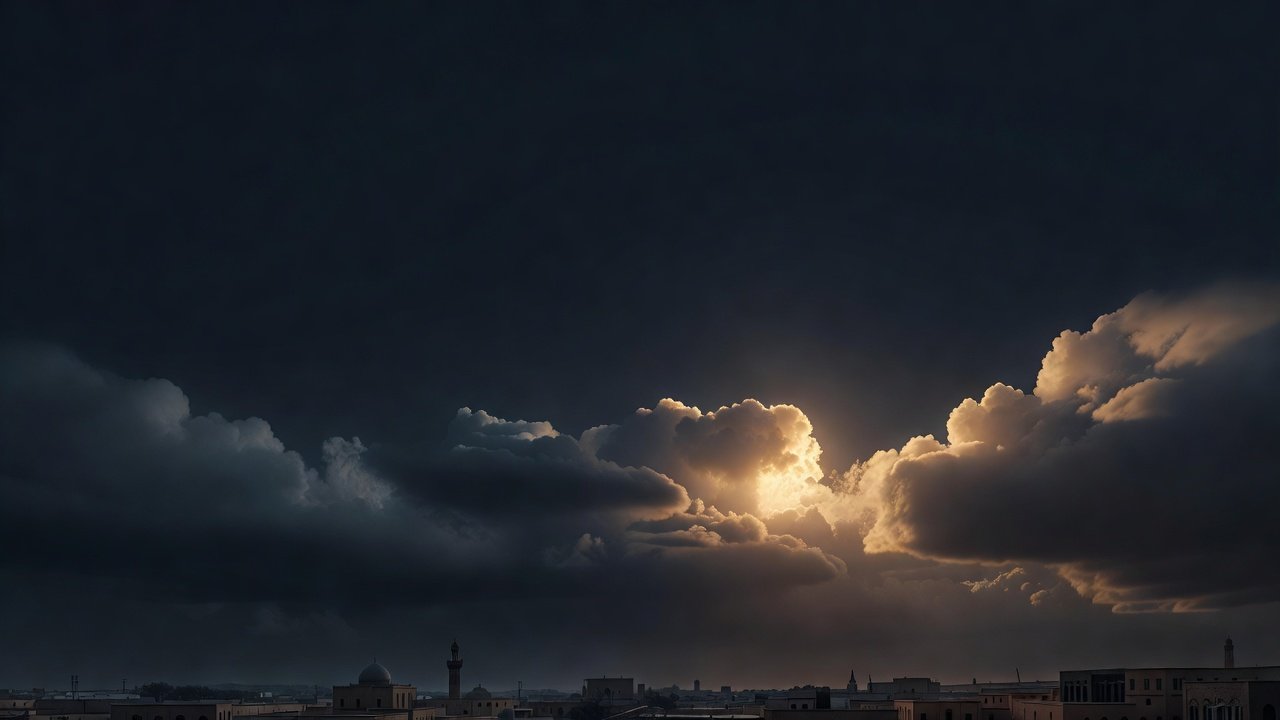
The Sun Behind the Clouds
"...As for the benefit of me during my occultation, it is like the benefit of the sun when the clouds hide it from the eyes..."
— Imam Mahdi (a.s.)
This is one of the most famous explanations of Ghaybah. Even when the sun is hidden by clouds, people still benefit from its light and warmth. In the same way, Shia belief says the hidden Imam still brings spiritual benefit, protection, and divine order, even when he is not seen.
The Length of Ghaybah and Hard Hearts
The dossier also notes a narration warning that the long occultation will harden hearts and cause many people to turn away from faith. The lesson is simple: time can weaken patience if a person does not stay spiritually strong.
Returning to the Scholars
Another important idea is that in the time of occultation, believers should turn to the narrators of the traditions, meaning qualified scholars. This becomes the basis for general deputyship in the Major Occultation.
Common Misunderstandings About Imam Mahdi’s Occultation
- “He is trapped in a cave.”
This is a misconception. Shia scholars reject it. The Imam is not imprisoned in a cave or cellar. The Sardab in Samarra is only connected to the last place where he was seen publicly before the occultation.
- “Waiting for the Imam means doing nothing.”
This is also wrong. True Intizar, or waiting, is not passive isolation. It means active preparation. A believer should improve their character, resist injustice, and support justice in society.
- “Anyone can claim to be his special deputy today.”
No. The final decree of the Imam ended special representation. Anyone making such a claim should be rejected.
Important Related Concepts
| Term | Meaning | Simple Explanation |
|---|---|---|
| Ghaybah | Occultation | The hidden life of Imam Mahdi |
| Al-Ghaybah al-Sughra | Minor Occultation | The short phase with four deputies |
| Al-Ghaybah al-Kubra | Major Occultation | The current long phase without special deputies |
| Tawqee | Signed decree | A written communication from the Imam |
| Niabat al-Ammah | General deputyship | Guidance by qualified scholars |
| Zuhur | Reappearance | The day the Imam appears openly |
| Intizar al-Faraj | Awaiting deliverance | Active hope and readiness |
| Raj’ah | The return | A future return of specific people before Judgment |
Differences of Opinion
There is some difference of opinion about the exact length of the Minor Occultation.
Some sources say it lasted:
- 64 years
- 67 years
- 69 years
- or 70 years
Why the difference? Because scholars differ on the exact starting point. Some begin counting from his birth, around 255/256 AH, when he had to be hidden from the Abbasids. Others begin from the martyrdom of his father in 260 AH. The dossier follows the common historical count from 260 AH to 329 AH.
There is also discussion about how to understand the Imam’s hidden presence. The dominant Shia view in the dossier is that he is not in another realm and not a completely invisible being. He lives in the ordinary world, but people do not recognize him.
Why This Belief Matters
For Shia Muslims, Ghaybah is not just a historical idea. It shapes everyday life.
It teaches that:
- tyranny does not last forever,
- truth can survive even when hidden,
- faith must continue without direct sight,
- and believers should stay ready for justice.
That is why waiting for the Imam is not treated as laziness. It is treated as a serious moral responsibility.
Frequently Asked Questions
1. What is the difference between the Minor and Major Occultation?
The Minor Occultation had four special deputies who communicated with the Imam. The Major Occultation has no such appointed deputies.
2. When did the Minor Occultation begin?
It began in 260 AH after the martyrdom of Imam Hasan al-Askari.
3. When did the Major Occultation begin?
It began in 329 AH after the death of the fourth deputy, Ali ibn Muhammad al-Samarri.
4. Is Imam Mahdi alive in Shia belief?
Yes. Shia belief says he is alive on Earth, but hidden from public recognition.
5. Does Shia Islam believe the Imam is in a cave?
No. That is a misunderstanding. The Sardab in Samarra is not believed to be his current residence.
6. Who guided the Shia community during the Minor Occultation?
The four deputies did.
7. Who guides the community during the Major Occultation?
Qualified jurists and scholars guide the community through general deputyship.
8. Why is the occultation necessary?
It protects the Imam’s life, preserves the divine proof, and prepares humanity for the final reappearance.
9. What does the “sun behind clouds” example mean?
It means the Imam still benefits humanity even when he cannot be seen directly.
10. Does waiting for the Imam mean being inactive?
No. It means active preparation, moral reform, and standing against injustice.
Key Takeaways
- Ghaybah means the hidden life of Imam Mahdi.
- Shia Islam divides it into Minor Occultation and Major Occultation.
- The Minor Occultation lasted about 69–70 years and involved four deputies.
- The Major Occultation began in 329 AH and continues today.
- Shia belief says the Imam is alive, hidden, and still spiritually beneficial.
- Waiting for him means active hope, not passivity.
Conclusion
The Minor and Major Occultation of Imam Mahdi are central to Twelve-Imam Shia belief. They explain how the final Imam can remain alive, protected, and relevant to the world while being hidden from ordinary public view.
The Minor Occultation gave the community a structured bridge through the four deputies. The Major Occultation removed direct representation and asked believers to rely on qualified scholars, patience, and active moral readiness. Together, these two phases shape Shia faith, hope, discipline, and the longing for a future filled with justice.
For a beginner, the simplest way to remember it is this: the Imam is hidden, not absent; alive, not gone; and waiting, not forgotten.