
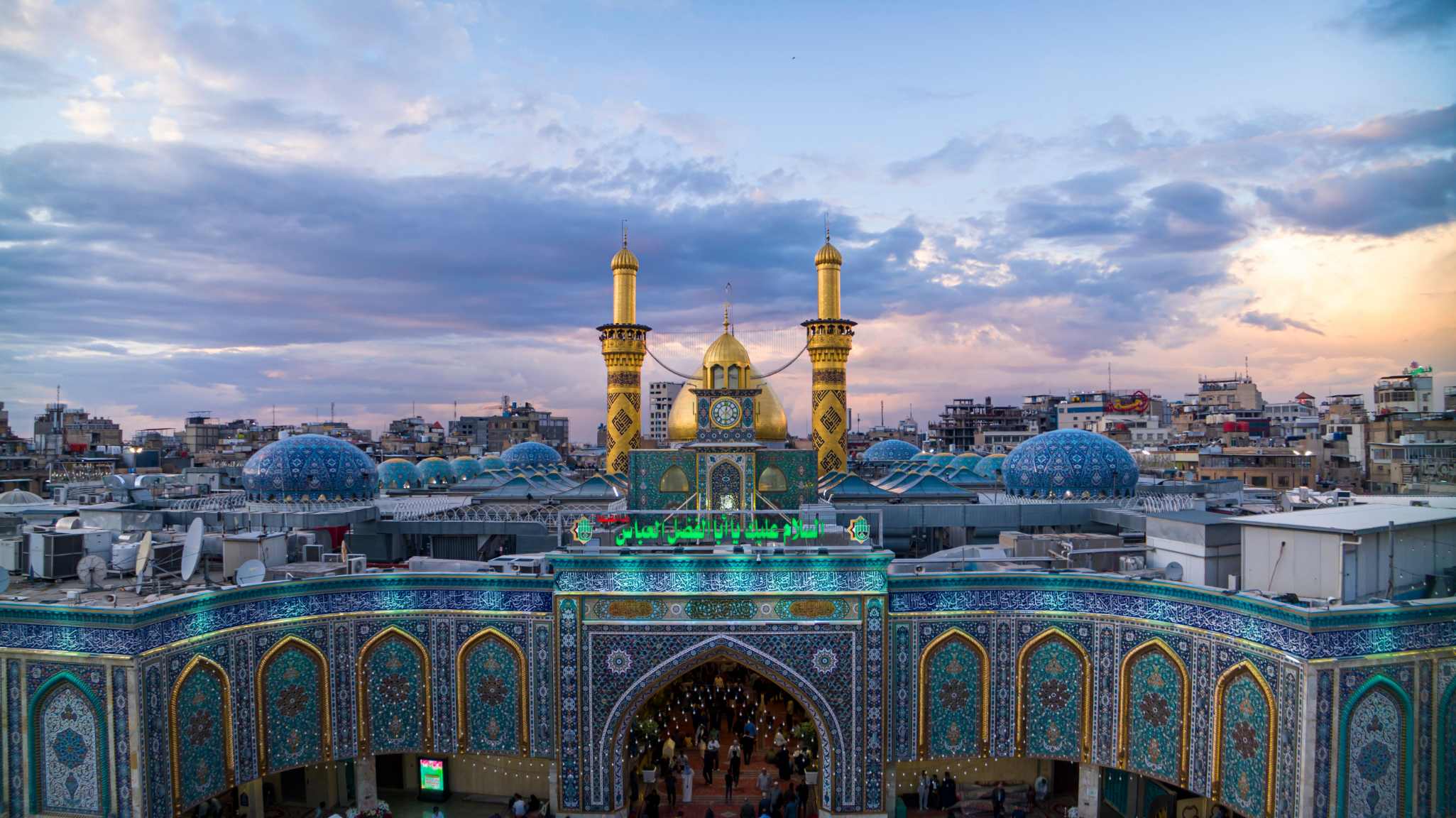
Abbas ibn Ali is remembered as one of the noblest figures in the tragedy of Karbala. He was the son of Imam Ali (a), the brother of Imam al-Husayn (a) and Lady Zaynab (a), and the trusted protector of the Prophet’s family during one of the most painful events in Islamic history. In the research dossier, he appears not only as a brave warrior, but also as a man of deep loyalty, selflessness, wisdom, and unwavering faith.
What made Abbas so unforgettable was not only how he fought, but why he fought. He stood beside Imam al-Husayn (a) with complete devotion, carried the standard of the army, guarded the women and children, and gave up water at the moment he needed it most. His story is one of honour, sacrifice, and love for truth.
Who Was Abbas ibn Ali?
Abbas ibn Ali was the son of Imam Ali Amir al-Muminin (a). He was also the brother of Imam al-Husayn (a) and Lady Zaynab (a). The dossier explains that he was especially dear to Imam al-Husayn (a), who raised him with nobility of character and high moral standards.
He was not only a family member. He was also a trusted companion, a defender, and a helper. In the language of the dossier, he was the Imam’s “right hand” and the person who gave him a sense of strength and protection.
A simple family picture
| Relationship | Description |
|---|---|
| Father | Imam Ali (a) |
| Brother | Imam al-Husayn (a) |
| Sister | Lady Zaynab (a) |
| Role in Karbala | Standard-bearer and guardian of the camp |
His Titles and Honorifics
Abbas ibn Ali is known by several honourable titles. Each one reflects a different part of his personality and role.
- Abul-Fadl al-Abbas: a widely used name and honourific for him.
- Moon of the Hashemites: this title was given because the brightness in his face was said to be very clear.
- Holder of the Standard: he carried the flag of Imam al-Husayn’s army.
- Guardian of the Harem: he protected the women and children of the Prophet’s household during the journey and the battle of Karbala.
These titles are important because they show that Abbas was remembered not just as a fighter, but as a servant, protector, and symbol of loyalty.
His Character and Moral Qualities
The research dossier presents Abbas ibn Ali as a man of exceptional character. His greatness was not limited to the battlefield. It showed in his knowledge, his courage, his mercy, and his loyalty.
Knowledge and wisdom
Imam al-Husayn (a) taught Abbas the rulings of Islamic Shariah. Because of this, Abbas is regarded in the dossier as one of the most virtuous scholars of Islam. This tells us that he was not only brave, but also deeply aware of religious duty.
Bravery and heroism
Abbas is described as an unmatched hero who copied his father, Imam Ali (a), in courage. During his final battle, he fought fearlessly against an army of about four thousand Umayyad warriors, and they fled from him in terror.
That detail is striking. It shows that his courage was not ordinary courage. It was the kind of strength that came from conviction.
Altruism and selflessness
One of the most powerful moments in his story is his refusal to drink water at the Euphrates. Even though he was severely thirsty, he did not drink a single drop. Why? Because he remembered the thirst of Imam al-Husayn (a), the children, and the harem.
This is one of the clearest signs of his selflessness. His own need came second. Their pain came first.
Loyalty
The dossier repeatedly emphasizes Abbas’s loyalty. He continually sought the company of his brother and gave him comfort through every hardship. He did not turn away when things became difficult. He stayed close when loyalty mattered most.
Abbas ibn Ali and the Ahl al-Bayt
The Ahl al-Bayt means the family of the Prophet. In the dossier, Abbas’s relationship with them is described as especially tender and meaningful.
With Imam al-Husayn (a)
Abbas was Imam al-Husayn’s most trusted protector. The Imam felt strength and protection as long as Abbas was with him. This is why Abbas was not just a brother in blood. He was a shield in practice.
With Lady Zaynab (a)
The dossier says that Lady Zaynab and Abbas shared a special relationship. She cared for him in his early life, and in return he took on the task of guarding her and meeting her needs. That exchange of care and protection adds a very human warmth to the history of Karbala.
Abbas ibn Ali in the Events of Karbala
To understand Abbas properly, the reader must follow the historical flow of Karbala. His life reaches its peak in those final hours.
The Night Before Ashura
On the night before Ashura, Abbas took charge of the Hashemite warriors. He gathered his brothers, nephews, and cousins and asked what they planned to do in the morning.
When they left the decision to him, Abbas made a courageous and serious statement. He said that their companions and supporters were not their relatives, and that their own family should carry the heavier burden. He declared that the next morning they would be the first to fight and would go ahead of their companions to death so that no one could blame them.
His family agreed unanimously. Lady Zaynab secretly heard this conversation, and it reassured her about their loyalty.
This moment matters because it shows that Abbas was not acting carelessly. He was leading with purpose, and he understood the moral weight of sacrifice.
The Day of Ashura
The day of Ashura is the central day of Karbala. This is where Abbas’s loyalty, grief, courage, and sacrifice all come together.
The martyrdom of his brothers
After the youths of the Prophet’s household were martyred, Abbas commanded his full brethren to go forward and fight. He wanted them to fight sincerely for Allah, and he also wanted to avenge their blood since they had no children.
He watched them fall and cried over their bodies. That detail reminds the reader that bravery does not mean absence of pain. Abbas felt the pain deeply, yet still remained steadfast.
The search for water
Later, Abbas was left as the only remaining Hashemite warrior beside Imam al-Husayn (a). He asked for permission to fight. The Imam first refused, calling him the holder of his standard. But Abbas insisted that he could no longer bear the situation and wanted to confront the hypocrites.
At that point, the Imam asked him to bring water for the thirsty children and the harem.
This is one of the most moving parts of the story. Abbas did not ask for glory. He asked for a mission of mercy.
His confrontation with Shimr
Abbas went to the enemy camp and warned them about Allah’s punishment. He demanded water for the family of the Prophet. Shimr responded harshly, saying that even if the whole earth were water under their control, they would not give a single drop unless the family accepted Yazid’s leadership.
This exchange shows the cruelty of the opposition and the desperation of the situation.
The battle at the Euphrates
When Abbas heard the cries of the thirsty children, he rode toward the River Euphrates with a waterskin. He scattered the enemy troops and filled the skin with water.
But he was not allowed to return easily. Enemies surrounded him and tried to stop him. What happened next became the final chapter of his life.
The Martyrdom of Abbas ibn Ali
The dossier describes his martyrdom in painful detail.
A hypocrite from Kufa hid behind a date-palm tree and struck Abbas’s right hand, cutting it off. Abbas then held the standard in his left hand and kept moving forward.
Another enemy hid behind a tree and severed his left hand as well. Even then, Abbas did not stop. Bleeding and extremely thirsty, he held the waterskin with his teeth. Then a spear pierced the skin and the water spilled out. At that moment, sadness overwhelmed him.
Finally, a man struck him on the head with an iron post. As he fell, Abbas called out his final farewell:
«“Peace be upon you, Abu Abdullah!”»
This farewell matters because it shows where his heart was until the very end. Even in death, his mind and love were with Imam al-Husayn (a).
Important Narrations and Laments Connected to Abbas
The dossier preserves several powerful lines connected to his final moments.
Abbas’s declaration of unshakable faith
After his right hand was cut off, he recited:
«“Even if you cut my hand, I will keep defending my religion and leader.”»
This line is important because it reveals his inner resolve. He did not see his injury as the end of his duty.
Imam al-Husayn’s grief
When Abbas’s final words reached the Imam, he rushed to the River al-Alqami, threw himself on his brother’s body, and cried:
«Arabic: الآنَ انْکَسَرَ ظَهْرِی، وَقَلَّتْ حِیلَتِی، وَشَمَتَ بی عَدُوِّی. Translation: “From now my back has broken and I am without hope while my enemies are rejoicing at my misfortune.”»
This lament is heartbreaking. It shows how deeply Imam al-Husayn (a) depended on Abbas’s protection and presence.
Lady Zaynab’s reaction
When Imam al-Husayn (a) returned to the camp wiping away his tears, Lady Sukaynah asked about her uncle. After hearing the news of his martyrdom, Lady Zaynab placed her hand on her heart and cried:
«“Oh, for my brother! Oh, for al-Abbas! We have certainly lost everything as you left us.”»
This reaction completes the emotional picture of Karbala. Abbas was not only a warrior. He was a source of comfort for the household.
Why Abbas ibn Ali Matters
Abbas ibn Ali matters because his life brings together several great virtues at once.
He was brave, but not reckless. He was strong, but not selfish. He was loyal, but not passive. He was a warrior, but also a guardian. He was thirsty, but he refused to drink before others.
That combination is what makes him unforgettable. His story teaches that honour is not only found in victory. Sometimes it is found in sacrifice, patience, and love for truth even when the end is painful.
Conclusion
Abbas ibn Ali stands in the memory of Karbala as a symbol of loyalty, courage, and selfless service. He was the son of Imam Ali (a), the brother and protector of Imam al-Husayn (a), and the guardian of the women and children of the Prophet’s family. He carried the standard, defended the helpless, and gave his life without hesitation.
His story still speaks clearly today because it answers a simple but powerful question: what does true loyalty look like when everything is at stake? Abbas ibn Ali answered that question with his life.