
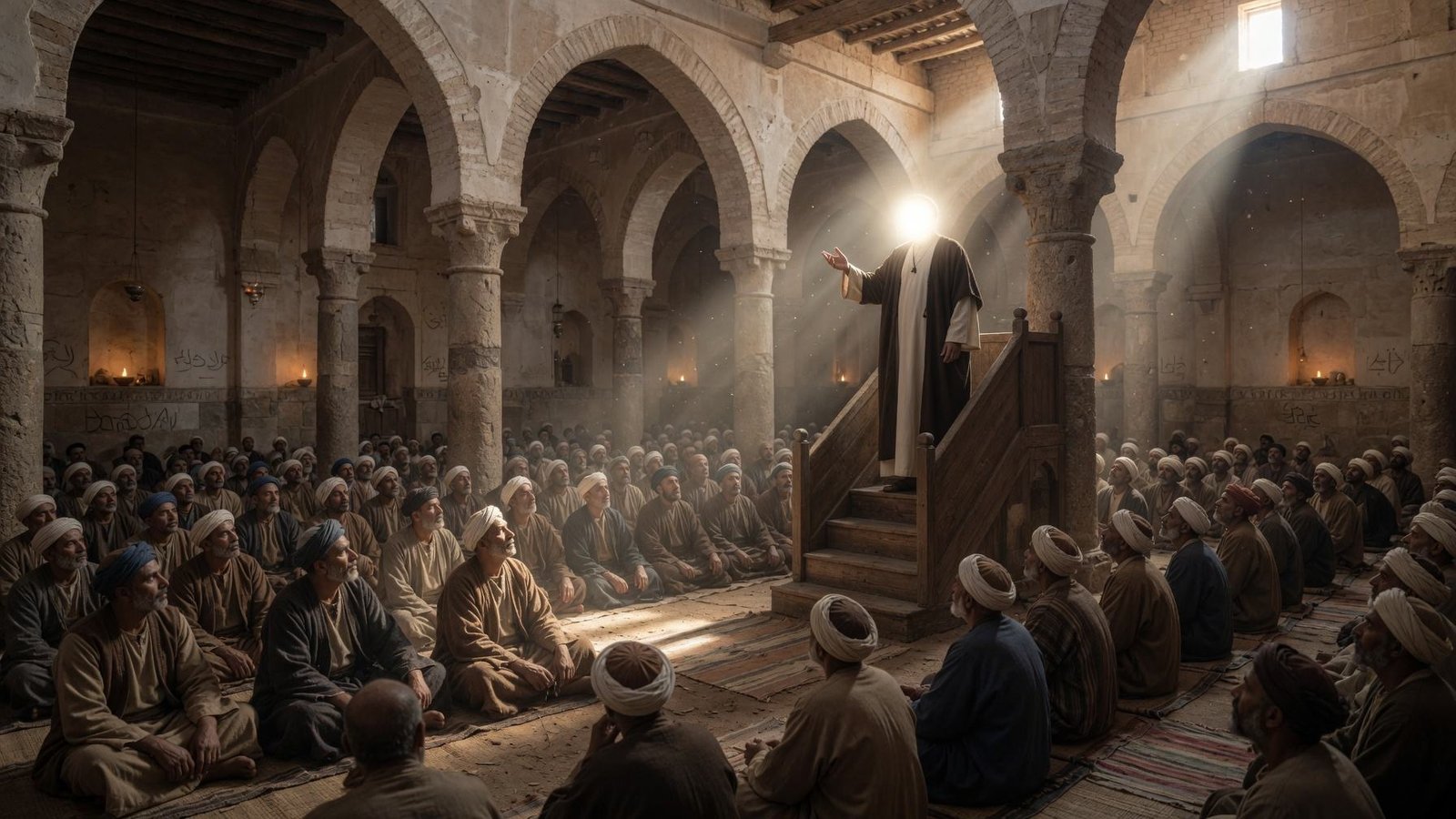
Nahj al-Balagha is one of the most important collections of Imam Ali's sermons, letters, and short sayings. It was compiled by Sayyid Razi and is especially known for its beauty of language, depth of thought, and moral power.
What makes these words unforgettable is their clarity. They speak about things people still struggle with today: pride, justice, patience, leadership, self-control, and the shortness of worldly life. Even though these sayings come from a different time, their meaning still feels direct and alive.
The teachings below return again and again to a few major ideas: this world is temporary, true justice begins inside the self, knowledge is a treasure, humility protects success, and patience gives strength in hard times.
The core lessons in these sayings
Before looking at the individual quotations, it helps to see the bigger picture.
Imam Ali's words in Nahj al-Balagha remind the reader that:
- this world is not permanent
- the Hereafter is the real place of return
- a person must control selfish desire before claiming to be just
- real knowledge includes knowing one's own value
- humility is most important at the moment of success
- leaders must be tested by their record, not their appearance
- patience is a form of strength
- power should make a ruler kinder, not harsher
- a simple life can be spiritually powerful
- belief in one God and loyalty to the Sunnah must remain firm
These ideas are simple, but they are not easy. That is why they continue to matter.
1) The world is a passage, not the final home
Why this matters:
This saying changes the way a person sees life. It does not tell us to stop living. It tells us not to confuse the journey with the destination. A person can earn, work, and build, but should never forget that the real account is not only what was collected here. It is also what was prepared for the Hereafter.
2) True justice begins by defeating selfish desire
Why this matters:
This is one of the clearest statements about moral discipline. A person cannot be truly fair while following every desire that rises inside the heart. Justice is not only about judges, rulers, or courts. It begins when a person learns to control the ego.
3) Contentment, knowledge, good manners, and deep thought
Why this matters:
This saying is beautiful because it connects inner life with outward life. Contentment protects the heart from endless hunger. Knowledge gives a person lasting wealth. Good manners improve the way a person is seen by others. Thought helps a person see clearly, just as a clean mirror shows a true image.
4) A wise person knows his own worth
Why this matters:
This is not only about education. It is about self-awareness. A person who does not understand his purpose becomes confused very easily. He may work hard for money and convenience, but neglect the things that truly shape his final outcome. Knowing your worth means knowing where your real future lies.
5) Success should lead to humility
Why this matters:
This is a needed lesson for every age. Many people become proud right after success. But the moment of success is also the moment of danger, because ego often enters quietly. This saying teaches the opposite: when your goal is reached, bow lower, not higher.
6) Patience is needed when society is in turmoil
Why this matters:
In times of anger, people often act quickly and regret it later. This saying is a warning against emotional decisions that destroy strength. It teaches that sometimes the best response is patience, because calmness can preserve both justice and dignity.
7) Good officials should be tested by their record
Why this matters:
This is practical wisdom for leadership. A charming person is not always a trustworthy person. Good leadership looks beyond appearance and asks a harder question: what did this person actually do before?
8) Patience, simplicity, and piety are a kind of protection
Why this matters:
These three ideas work together. Patience helps a person endure. Simple living helps a person become less greedy. Piety protects the heart and the future. In this view, real strength is not loudness or display. Real strength is steadiness.
9) Power should make a ruler kinder, not more arrogant
Why this matters:
This is a deep statement about leadership ethics. Power is not a license to look down on people. It is a test. A good ruler becomes more gentle, more careful, and more responsible the more authority he has.
10) The Imam's own life was simple
Why this matters:
This saying shows the gap between words and life can be very small when a leader is sincere. Imam Ali did not only speak about restraint; he lived it. At the same time, he did not ask everyone to copy his exact level of simplicity. He asked for moral effort, honesty, and self-discipline.
11) Keep monotheism and the Sunnah alive
Why this matters:
This final advice is powerful because it goes to the foundation. Faith is not built on noise or slogans. It stands on two great anchors: belief in one God and loyalty to the Prophet's teachings. If those remain firm, the path remains clear.
Final reflection
These sayings are different in tone, but they all move in the same direction. They teach that the world is temporary, the soul must be disciplined, justice must be real, leadership must be honest, and humility must remain alive even in success.
That is why Nahj al-Balagha still speaks so strongly. It does not merely offer wisdom for scholars or rulers. It speaks to ordinary people, too: students, workers, leaders, and anyone trying to live with purpose.
A person who reads these sayings carefully will notice something simple but important: Imam Ali keeps bringing the heart back to what lasts.
FAQ
Nahj al-Balagha is one of the most important collections of Imam Ali's sermons, letters, and short sayings. It was compiled by Sayyid Razi and is known for its beauty of language, depth of thought, and moral power.
They speak about things people still struggle with today: pride, justice, patience, leadership, self-control, and the shortness of worldly life. Their meaning still feels direct and alive even though they come from a different time.
The main message is that the world is temporary, the Hereafter is the real place of return, a person must control selfish desire, real knowledge includes knowing one's own value, humility is most important at the moment of success, and patience is a form of strength.
It teaches that when you are guided to your right path or goal, you should be as humble as you can be before your Lord. It also teaches that in times of anger or turmoil, the best response is patience because calmness can preserve both justice and dignity.
It teaches that a ruler should not choose officials based only on intuition or good appearance, but should test them by what they actually did before. Power should make a ruler kinder, not more arrogant. Justice begins when a person learns to control the ego.