
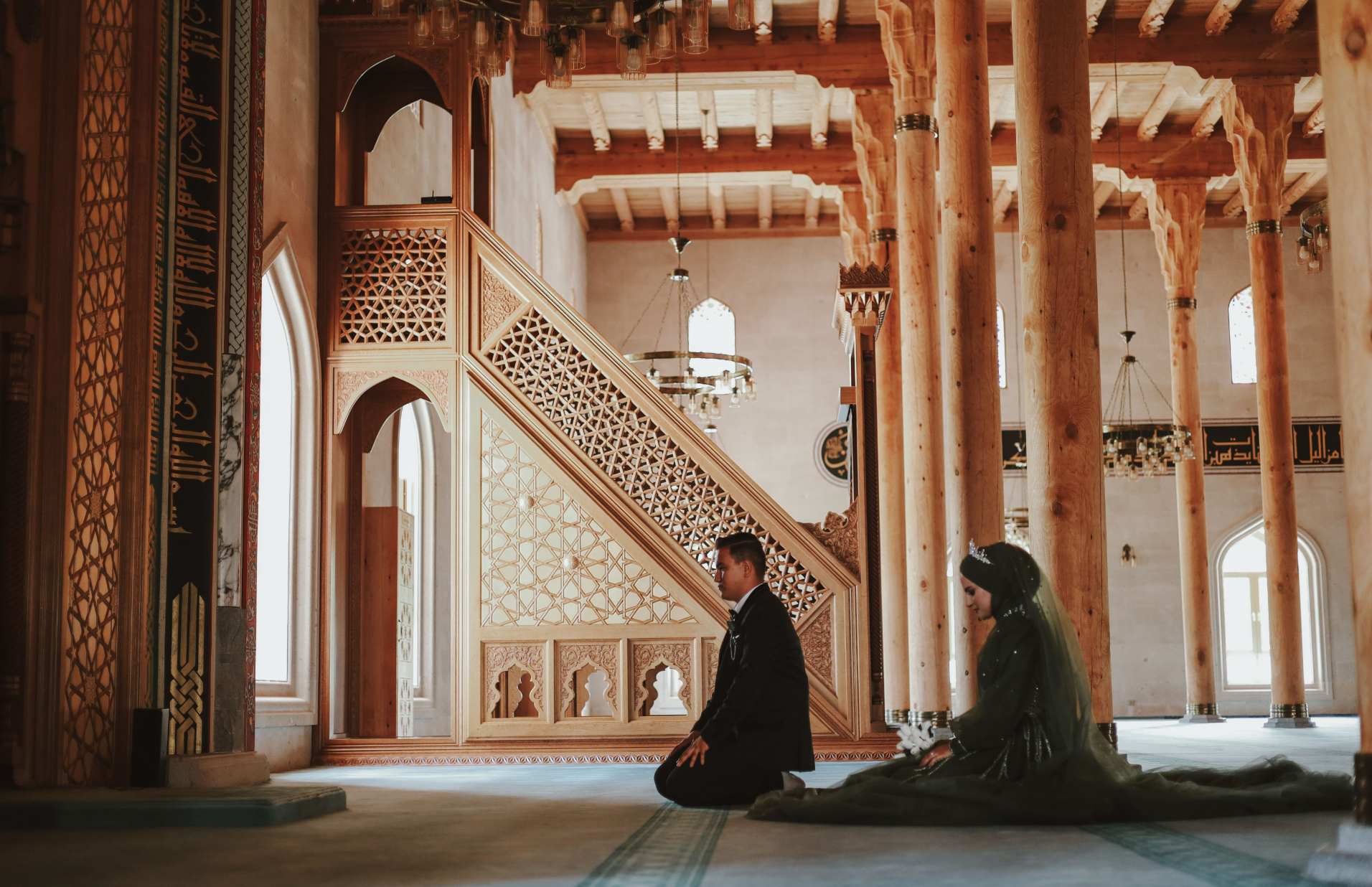
What Is Muta (Temporary Marriage)?
Muta (mut'a) is a legally binding temporary marriage in Shia Islamic law. In simple terms, it is a marriage contract between a man and a woman for a fixed period of time, with a specified dower (mahr) agreed in advance. It is not meant to be open-ended, and it is not the same as ordinary dating or an informal relationship.
In Shia thought, muta is an important and lawful form of marriage. It is seen as a regulated solution for situations where a permanent marriage is not possible, and it is tied to clear rules, responsibilities, and boundaries.
Muta in Simple Words
The word mut'a literally carries the meaning of enjoyment or pleasure. In Islamic legal texts, however, it refers to a very specific contract, not casual relationships.
A valid muta marriage requires:
- a clear agreement between both adults,
- a fixed time period,
- and a specified dower (mahr) for the woman.
That means the marriage must be openly arranged and clearly defined from the beginning.
Why Muta Matters in Shia Islam
In Shia Islam, muta is not treated as a side issue. It is considered a meaningful part of Islamic law and a way to protect people from unlawful sexual relations.
According to the research, muta is viewed as:
- a divine mercy from Allah,
- a practical solution for people who cannot enter a permanent marriage,
- and a way to stay faithful to the Sunnah of the Prophet.
The idea is simple: if someone is in a difficult situation, such as travel or military service, muta provides a lawful and structured option instead of leaving the person without a permissible path.
The Quranic Basis for Muta
Shia scholars connect muta to specific Quranic verses.
1. Surah An-Nisa (4:24)
The dossier cites this verse as the main Quranic evidence for muta:
فَمَا اسْتَمْتَعْتُمْ بِهِ مِنْهُنَّ فَآتُوهُنَّ أُجُورَهُنَّ فَرِيضَةً
“Those of them with whom you contract mut’ah, give them their prescribed dowries...”
Quran 4:24
According to the explanation in the research, this verse refers to temporary marriage and the payment of a fixed dower. The phrase is understood as evidence that muta is a real marriage contract with a set term.
2. Surah Al-Ma'idah (5:87)
The research also connects muta with this verse:
يَا أَيُّهَا الَّذِينَ آمَنُوا لَا تُحَرِّمُوا طَيِّبَاتِ مَا أَحَلَّ اللَّهُ لَكُمْ
“O you who believe! Do not make haram the good things which Allah has made halal for you...”
Quran 5:87
In the dossier, this verse is linked to an incident in which the Prophet Muhammad permitted muta during a military expedition when companions had no wives and feared hardship. The point is that muta was treated as something lawful, not forbidden.
Hadith About Muta
The dossier includes several important narrations that explain the Shia position.
Muta Is Halal Until the Day of Judgment
Imam al-Baqir is reported to have said that Allah made muta halal in the Quran and through the Prophet, and that it remains halal until the Day of Judgment.
This is a central Shia belief: muta was never abrogated by the Prophet.
The Two Essential Conditions
Imam Ja'far al-Sadiq said: "Mut’ah does not exist except through two things: a specified term and a specified dowry."
This is one of the clearest legal summaries in the dossier. Without these two things, the contract is not valid.
Historical Practice
The research also cites a report from Jabir b. Abd Allah saying that muta was practiced during the time of the Prophet, Abu Bakr, and Umar, until Umar later forbade it.
Shia scholars use this report to argue that the prohibition came later from Caliph Umar, not from the Prophet Muhammad.
A Moral Safeguard
Imam Ali is quoted as saying: "If 'Umar had not prohibited mut'a, no one would commit fornication except the wretched."
This shows how strongly muta is tied, in Shia thought, to preventing zina and keeping people within lawful limits.
How Muta Works
A muta marriage is not vague. It has clear legal parts that must be agreed upon.
1. The Marriage Formula
Like permanent marriage, muta requires an offer and acceptance. The woman usually speaks the marriage formula using specific Arabic words, and the man accepts it.
2. The People Involved
According to the dossier:
- A Muslim man may contract muta with a chaste Muslim, Christian, or Jewish woman.
- A Muslim woman may only marry a Muslim man in this way.
- The woman must be unmarried and chaste.
- If she is a virgin, the marriage is permissible but may be discouraged if it could bring shame to her family, and it usually requires the permission of her father or paternal grandfather.
3. The Time Period
The time period must be stated clearly.
For example, it could be:
- a few days,
- several months,
- or a number of years.
If the time is not mentioned, the dossier says the contract becomes invalid, or in some cases it turns into a permanent marriage according to the majority view.
4. The Dower (Mahr)
The dower must also be fixed in advance. It can be money, property, or something of value.
If no dower is mentioned, the contract is invalid.
The woman owns the full dower once the contract is completed.
What Happens When Muta Ends?
Muta ends differently from permanent marriage.
There is no ordinary divorce (talaq) in the usual sense. The marriage ends automatically when the agreed time finishes.
It can also end earlier if the husband returns the remaining time to the woman.
That is one reason muta is considered highly structured. It does not depend on vague promises or private assumptions.
Inheritance in Muta
By default, spouses in a muta marriage do not inherit from each other automatically.
However, the dossier says inheritance can be made part of the contract if both sides clearly agree to it.
Children born from the union do inherit fully from both parents.
Children and Paternity
One important point in the research is that children born from muta are legitimate children.
If pregnancy occurs, the child is legally attributed to the father unless there is absolute knowledge that he is not the father.
This matters because muta is not treated as random or unregulated. It is meant to protect lineage and family rights.
The Waiting Period (Iddah)
After a muta marriage ends, the woman must observe a waiting period if the marriage was consummated.
This waiting period exists to make sure she is not pregnant.
According to the dossier:
- if the term ends, she waits two menstrual periods,
- or 45 days if she is of age but does not menstruate,
- if the husband dies, she waits 4 months and 10 days,
- and there is no waiting period in some cases, such as for an unconsummated marriage, or for prepubescent and post-menopausal women.
This is another reason muta is not the same as casual intimacy. It has legal consequences and a real waiting period.
Can Muta Be Renewed?
Not while the current contract is still active.
If the man wants to start a new muta contract with the same woman, the current period must first be ended by returning the remaining time.
Common Misunderstandings About Muta
“Isn't Muta Just Zina?”
No. According to the dossier, muta is a real marriage contract with legal rules, a dower, a fixed period, a waiting period, and lawful children.
That is very different from fornication, which has no contract and no legal structure.
“Was Muta Banned by the Prophet?”
The Shia view presented in the research is that it was not banned by the Prophet. The dossier says it remained in practice during the Prophet's lifetime and later became forbidden by Caliph Umar.
“Is It the Same as Marriage With Secret Intention of Divorce?”
No. The research treats these as very different.
In muta, both people openly agree to the temporary nature of the marriage.
In the other practice, one person secretly plans to divorce later, which the dossier presents as misleading and not equivalent to muta.
Important Arabic Terms
| Arabic | Meaning | Simple Explanation |
|---|---|---|
| متعه | Enjoyment / pleasure | Temporary marriage for a fixed period |
| النكاح المنقطع | Discontinued marriage | Another legal term for muta |
| مهر / أجور | Dower | The agreed payment or gift for the wife |
| مدة | Time period | The fixed duration of the contract |
| عدة | Waiting period | The time a woman must wait after the marriage ends |
| زواج بنية الطلاق | Marriage with intention of divorce | A different practice, not the same as muta |
The Main Idea to Remember
Muta is not an informal relationship. In Shia Islam, it is a lawful temporary marriage with clear conditions, a fixed period, a specified dower, and legal consequences.
Whether someone agrees with it or not, the Shia position is that muta is part of Islam's legal framework and must be understood as a serious contract, not a casual arrangement.
Conclusion
So, what is muta?
It is a temporary marriage contract in Shia Islam, made with mutual consent, a fixed time limit, and a specified dower. It has rules about who can enter it, how long it lasts, how it ends, and what happens afterward. In Shia belief, it is a lawful and protected form of marriage meant to keep people within halal boundaries and away from zina.
Frequently Asked Questions
Muta is a temporary marriage contract in Shia Islam with a fixed time period and a specified dower.
No. It is a formal marriage contract with legal rules, not casual dating.
Yes. A specified mahr is one of its essential conditions.
Not automatically. Inheritance only applies if it is clearly stipulated in the contract.
Yes. According to the dossier, Shia Islam treats Muta as a lawful and valid form of marriage.