
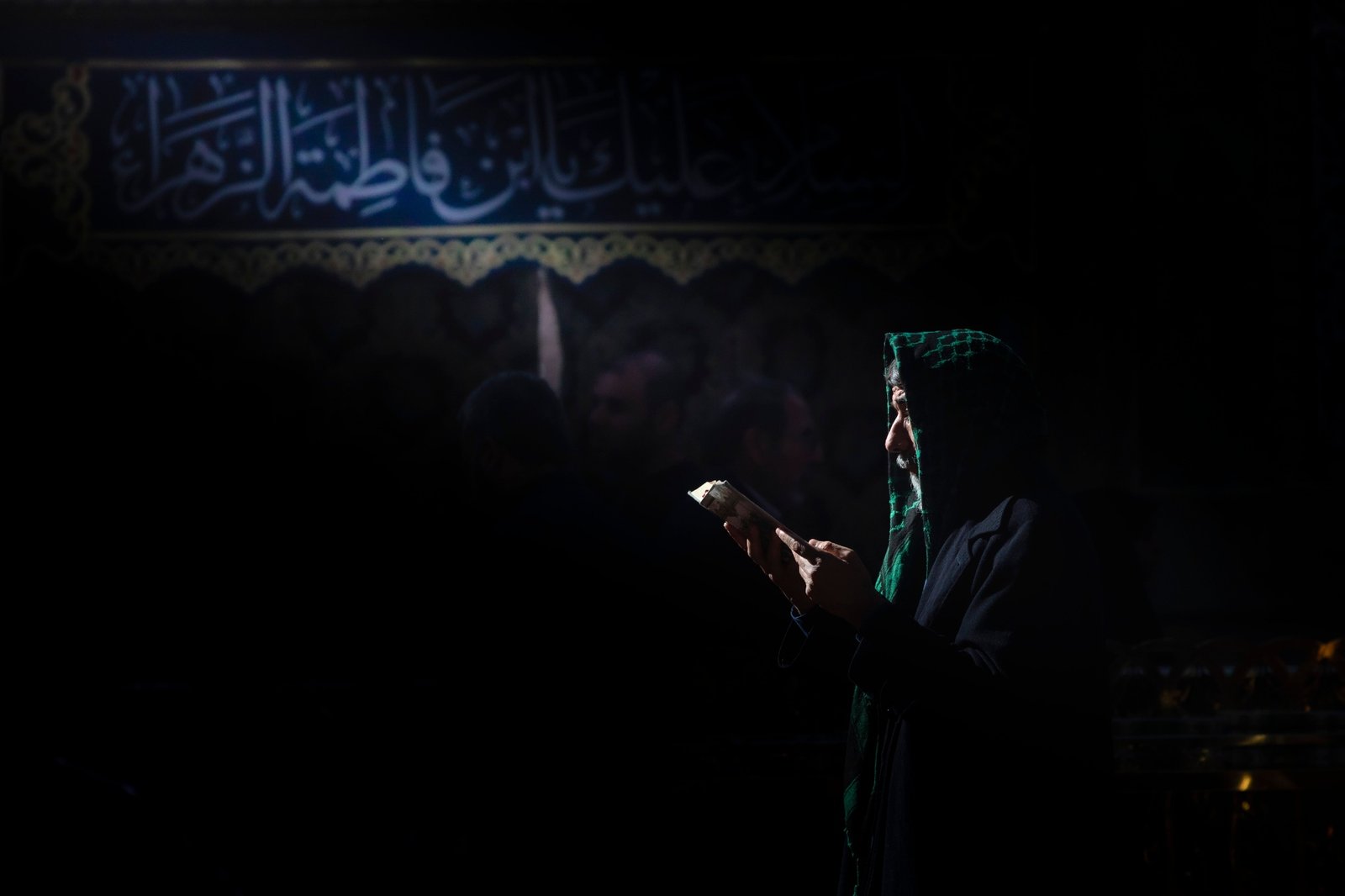
Quick Answer
No. In Shia Islam, prayer (duʿa) is directed to Allah alone. What Shia Muslims call tawassul (توسل, tawassul) is not worship of saints or the Ahl al-Bayt; it means asking Allah through a chosen means, such as the Prophet or the Imams, because Allah has appointed them as honored intermediaries. Shia sources also describe ziyārah (زيارة, ziyārah) as a heartfelt visitation that turns the believer toward Allah through those He has chosen, not a replacement for worship of Allah.
What Does Tawassul Mean?
The Arabic root behind tawassul comes from wasīlah (وسيلة, wasīlah), meaning a means, way, or channel to reach something. In Shia discussions, tawassul means asking Allah through a respected servant of Allah, not believing that that person has divine power on their own. A Shia juristic answer from the office of Ayatollah Sistani explicitly frames this as pleading with the Infallibles because they are a conduit (wasīlah) to God Almighty, and says this is permissible because Allah commands believers to seek means of approach to Him.
That is the key point. In the Shia understanding, the final giver is always Allah. The saint, prophet, or Imam is not the source of power; they are the honored path through which a servant turns to Allah.
What Shia Muslims Actually Believe
Shia theology is built on tawḥīd (توحيد, tawḥīd) — the oneness of Allah. The Ahl al-Bayt and the Imams are deeply honored, but they are not gods and are not worshipped. One Al-Islam explanation of ziyarah says that these are the Prophets and Imams who invite humanity to worship the One True God, and that ziyārah is, in reality, speaking to Allah through intermediaries He has appointed.
This is why Shia Muslims may say words of devotion at a shrine, recite a ziyārah text, or ask for intercession, yet still insist that worship belongs to Allah alone. The acts may look unfamiliar to outsiders, but the belief behind them is firmly monotheistic.
Why This Is Not “Praying to Saints”
The phrase “praying to saints” can be misleading because it suggests that Shia Muslims think holy people answer prayers by themselves. That is not the Shia view. In Shia practice, duʿa is for Allah, while the Imams are asked to intercede only as Allah’s servants. A Shia source on ziyarah states plainly that duʿa is speaking to Allah, while ziyarah is speaking with the role-models and true examples of faith sent by Allah. It then adds that ziyarah is really speaking to Allah through intermediaries He has appointed.
Ayatollah Sistani’s office says the same thing in practical terms: if a person asks the Infallibles for help with things like sustenance, children, or healing, and does not believe they create or independently provide, but only sees them as a wasīlah to Allah, then this is permissible.
In simple English, the idea is this:
Shia Muslims do not worship the saint.
They ask Allah, while honoring the saint as a means of approach.
Quranic Evidence Often Discussed
Shia scholars often connect tawassul with Quranic verses that support the idea of seeking a means to Allah.
1) Surah Al-Ma’idah 5:35
يَا أَيُّهَا الَّذِينَ آمَنُوا اتَّقُوا اللَّهَ وَابْتَغُوا إِلَيْهِ الْوَسِيلَةَ
“O believers! Be mindful of Allah and seek what brings you closer to Him...”
Surah Al-Ma’idah (5:35)
This verse is central in discussions of tawassul because it literally tells believers to seek a means toward Allah. Shia scholars use it to explain that approaching Allah through chosen servants does not conflict with monotheism.
2) Surah An-Nisa 4:64
Translation excerpt:
“If only those who wronged themselves had come to you, O Prophet, and asked forgiveness of Allah, and the Messenger had asked forgiveness for them, they would have found Allah ever Accepting of Repentance, Most Merciful.”
This verse is often mentioned in tawassul discussions because it shows people coming to the Prophet and seeking Allah’s forgiveness with the Prophet’s prayer for them. It supports the idea that a holy servant’s intercession can be meaningful while the forgiveness still comes from Allah.
3) Surah Al-Baqarah 2:125
Translation excerpt:
“And ˹remember˺ when We made the Sacred House a centre and a sanctuary for the people ... ‘You may take the standing-place of Abraham as a site of prayer.’”
This verse is not about tawassul directly, but it shows that Islam recognizes sacred places and meaningful acts of devotion tied to them. Shia writers often use this kind of verse to explain why shrines and holy places can have spiritual importance without becoming objects of worship.
Ziyārah and the Shrines of the Ahl al-Bayt
Ziyārah (زيارة, ziyārah) means visitation. In Shia thought, it is not just “going somewhere.” It is a spiritual act of presence, remembrance, respect, and loyalty. One Al-Islam explanation says ziyārah is an action of the heart, involving turning toward the maʿṣūmīn, and that a believer can remember the Ahl al-Bayt as the means through which Allah’s blessings reach creation.
This is why visiting a grave or shrine is not the same thing as worshipping the person buried there. In fact, Shia law draws a sharp line between honoring Allah’s friends and performing worship for anyone else. Ayatollah Sistani’s legal ruling says that sajdah (prostration) for any being other than Allah is unlawful; if someone places their forehead before the grave of an Imam, it is only acceptable if the intention is gratitude to Allah, not worship of the grave itself.
So, in Shia Islam, a shrine is a place of remembrance, not a rival to the mosque.
Common Misunderstandings
“Isn’t asking an Imam for help the same as worshipping him?”
No. Worship means treating someone as divine or directing acts of worship to them. Shia sources consistently place the Ahl al-Bayt in the role of honored servants and intermediaries, not creators or independent powers.
“Does tawassul mean Allah is ignored?”
No. Tawassul actually keeps Allah at the center. The whole point is to ask Allah through a permitted means. The one who answers is still Allah.
“Are shrines sacred because the people inside them are divine?”
No. They are sacred because the people connected to them are among Allah’s chosen servants, and because visiting them helps believers remember Allah, the afterlife, moral duty, and loyalty to the truth.
Simple Comparison Table
| Practice | What It Means in Shia Islam | Is It Worship? |
|---|---|---|
| Duʿa | Asking Allah directly | No, this is worship of Allah |
| Tawassul | Asking Allah through a chosen servant | No |
| Ziyārah | Visiting and honoring the righteous with a spiritual purpose | No |
| Sajdah to anyone besides Allah | Prostration to a created being | Not allowed as worship |
Frequently Asked Questions
Do Shia Muslims pray to saints?
No. Shia Muslims pray to Allah. They may ask saints, prophets, or Imams to intercede, but they do not treat them as gods.
What is tawassul in simple words?
Tawassul means asking Allah through a respected means, such as the Prophet or the Imams.
Is ziyārah just a cultural habit?
No. In Shia Islam it is a devotional act with spiritual meaning, tied to remembrance, loyalty, reflection, and nearness to Allah.
Do Shia Muslims believe the Imams have independent power?
No. The sources presented here describe them as honored servants and intermediaries, not independent creators or divine beings.
Why do some people misunderstand this practice?
Because from the outside, hearing a person call on a holy figure can sound like worship. But in Shia belief, the intention is not worship; it is asking Allah through a beloved servant of Allah.
Conclusion
So, do Shia Muslims pray to saints? No — not in the sense of worship. Shia Islam teaches that Allah alone is the One who hears, answers, forgives, and gives. Tawassul is the practice of seeking Allah through a chosen means, and ziyārah is a way of remembering and honoring the righteous while staying firmly inside tawḥīd.
That is why the real Shia answer is simple:
Allah is worshipped.
The Ahl al-Bayt are loved, honored, and used as a means to draw near to Allah.