
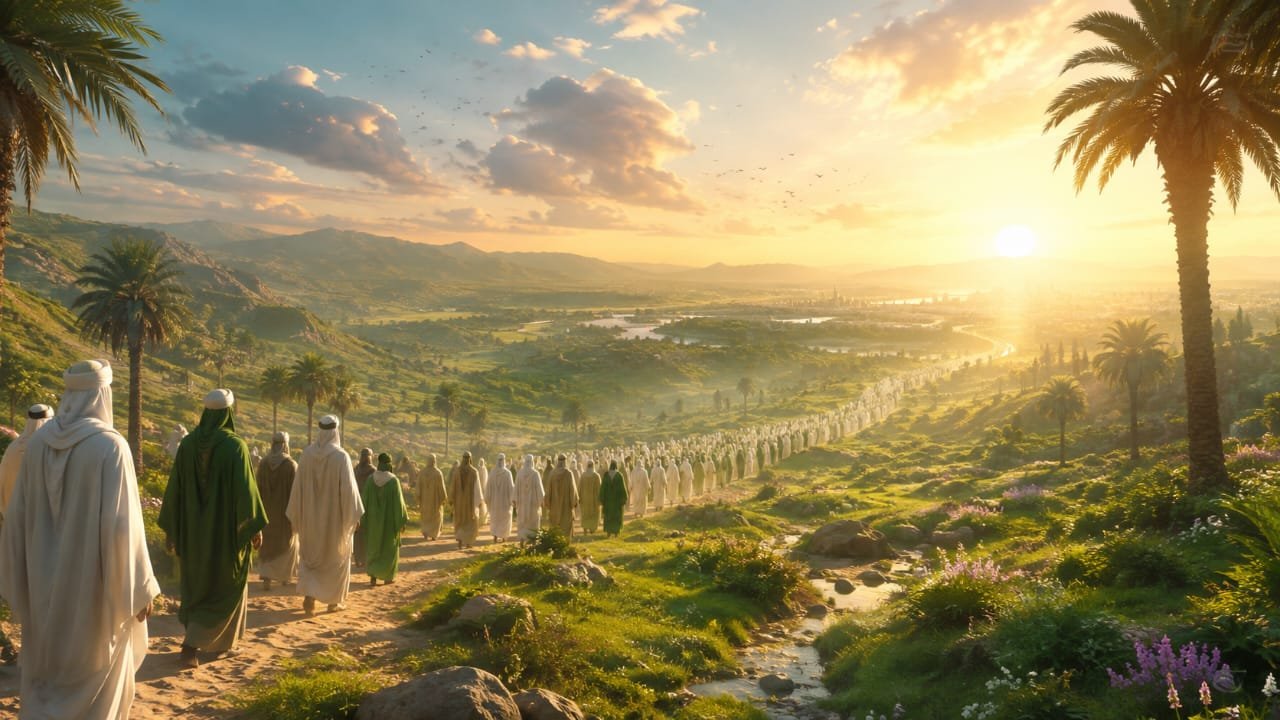
Raj'ah (الرجعة, al-raj‘ah) is a Shia belief that, before the Day of Judgment, Allah will bring back to life certain people from history. This includes the pure believers and the most stubborn oppressors. It is not a return of everyone. It is a special event connected to justice, truth, and the final victory of God’s chosen guidance.
For Shia Muslims, Raj'ah is not a side idea with no meaning. It is tied to the belief that Allah will fully show His justice in this world before the final Judgment Day arrives.
What Does Raj'ah Mean?
The Arabic word رجعة (raj‘ah) means return.
In Shia Islam, it refers to a future time when Allah brings back to life a selected group of people before the final Day of Judgment. These are not random people. They are special groups:
- the pure believers, including the Ahl al-Bayt
- the oppressed who were wronged in history
- the worst enemies and tyrants, so they can face justice
Think of it like this: the story of the world does not end with oppression winning. Before the final courtroom of the Hereafter, Allah shows a smaller but very powerful scene of justice in this world itself.
Why Do Shia Muslims Believe in Raj'ah?
The heart of Raj'ah is divine justice.
Many people in history lived and died without seeing justice done to them. Some were oppressed, killed, or silenced. Some tyrants lived proudly and escaped earthly punishment. Raj'ah answers that injustice.
It shows three important truths:
- Allah does not forget the oppressed.
- Allah does not leave tyranny unanswered.
- The final victory of truth will be shown openly, not hidden.
In Shia belief, Raj'ah is connected to the promise that the truth will fully prevail. It is also tied to the future government of justice under Imam Mahdi (a.s.).
«Simple idea: Raj'ah means history is not finished until Allah says it is finished.»
Quranic Evidence for Raj'ah
Shia scholars point to several verses of the Quran that they understand as evidence for Raj'ah.
1) Surah An-Naml, 27:83
وَيَوْمَ نَحْشُرُ مِنْ كُلِّ أُمَّةٍ فَوْجًا مِّمَّن يُكَذِّبُ بِآيَاتِنَا فَهُمْ يُوزَعُونَ
“And the day We gather from every nation a group of those who denied Our signs, and they will be driven in ranks.”
Surah An-Naml (27:83)
This verse is important because it speaks about a group from every nation, not all people at once. Shia interpretation sees this as pointing to a special return before the Day of Judgment.
2) Surah As-Sajdah, 32:21
وَلَنُذِيقَنَّهُم مِّنَ الْعَذَابِ الْأَدْنَىٰ دُونَ الْعَذَابِ الْأَكْبَرِ لَعَلَّهُمْ يَرْجِعُونَ
“And We will surely let them taste the nearer punishment short of the greater punishment, so that they may return.”
Surah As-Sajdah (32:21)
Shia scholars connect the “nearer punishment” with a punishment in this world before the greater punishment of the Hereafter.
3) Surah Al-Isra, 17:5–6
فَإِذَا جَاءَ وَعْدُ أُولَاهُمَا بَعَثْنَا عَلَيْكُمْ عِبَادًا لَّنَا أُولِي بَأْسٍ شَدِيدٍ فَجَاسُوا خِلَالَ الدِّيَارِ ۚ وَكَانَ وَعْدًا مَّفْعُولًا
ثُمَّ رَدَدْنَا لَكُمُ الْكَرَّةَ عَلَيْهِمْ وَأَمْدَدْنَاكُم بِأَمْوَالٍ وَبَنِينَ وَجَعَلْنَاكُمْ أَكْثَرَ نَفِيرًا
“So when the promise came for the first of them, We sent against you servants of Ours, those of great military might, and they searched through the homes. And it was a promise fulfilled. Then We gave back to you the return victory over them, and We reinforced you with wealth and sons and made you more numerous in manpower.”
Surah Al-Isra (17:5–6)
The key phrase here is “We gave back to you the return”. In Shia interpretation, Imam Sadiq (a.s.) connected this kind of language with Raj'ah.
4) Surah Al-Qasas, 28:5–6
وَنُرِيدُ أَن نَّمُنَّ عَلَى الَّذِينَ اسْتُضْعِفُوا فِي الْأَرْضِ وَنَجْعَلَهُمْ أَئِمَّةً وَنَجْعَلَهُمُ الْوَارِثِينَ
وَنُمَكِّنَ لَهُمْ فِي الْأَرْضِ وَنُرِيَ فِرْعَوْنَ وَهَامَانَ وَجُنُودَهُمَا مِنْهُم مَّا كَانُوا يَحْذَرُونَ
“And We wished to favor those who were oppressed in the land and make them leaders and make them inheritors. And We establish them in the land and show Pharaoh and Haman and their soldiers from them that which they had feared.”
Surah Al-Qasas (28:5–6)
This verse is about the Children of Israel, but Shia interpretation also sees a deeper meaning in it: Allah raises the oppressed and brings the arrogant to account.
Hadith About Raj'ah
The Shia tradition also includes strong narrations about Raj'ah.
Imam Sadiq (a.s.) said that belief in Raj'ah is part of loyalty to the Ahl al-Bayt. In the narration, he makes it clear that rejecting Raj'ah is not a small matter.
— Imam Sadiq (a.s.)
This shows that Raj'ah is not treated as a side opinion. It belongs to the structure of Shia belief.
According to Imam Sadiq (a.s.), the first person whose grave will split open and who will return to this world is Imam Hussain (a.s.).
— Imam Sadiq (a.s.)
That is a powerful and emotional idea. The one who was ظلم (zulm — oppressed) most deeply at Karbala will return in the time of truth.
Another narration explains that Imam Hussain (a.s.) will return and take part in the final rites of Imam Mahdi (a.s.). This includes washing, shrouding, and burying him.
— Shia tradition
Why is this important?
Because in Shia belief, the burial of an infallible Imam is not a random event. It is part of the sacred continuity of divine leadership. The return of Imam Hussain (a.s.) in this context shows how closely Raj'ah is tied to the mission of the Imams.
Who Returns First in Raj'ah?
The clearest answer in the Shia sources is: Imam Hussain ibn Ali (a.s.).
That matters a lot. It shows that Raj'ah is not just about punishment. It is also about honour, restoration, and the return of the most beloved figures in Shia history.
| Group | Role in Raj'ah |
|---|---|
| Pure believers | Return to witness truth and support divine justice |
| Ahl al-Bayt | Return as part of God’s promise and leadership |
| Oppressors | Return to face earthly justice |
| Imam Hussain (a.s.) | First person named in the narrations as returning |
Raj'ah and the Role of Imam Mahdi
Raj'ah is closely connected to Imam Mahdi (a.s.), also called al-Qaim (القائم, al-Qā’im), meaning the one who rises.
In Shia belief, Imam Mahdi will appear at the time when the world is filled with injustice. His rise begins a new era of truth. Raj'ah is linked to that era.
This connection makes sense:
- Imam Mahdi establishes justice.
- Raj'ah follows in the same world of justice.
- The oppressed are honoured.
- The oppressors face consequences.
So Raj'ah is not separate from the mission of Imam Mahdi. It is part of the same great divine plan.
Raj'ah vs. the Day of Judgment
Many people confuse Raj'ah with Qiyamah (قيامة, qiyāmah), the Day of Judgment.
They are not the same.
| Raj'ah | Day of Judgment |
|---|---|
| Happens before the final Judgment Day | Happens at the end of the world |
| Only selected people return | All people are raised |
| Focuses on earthly justice | Focuses on final accountability |
| Linked with Imam Mahdi’s era | The final, universal resurrection |
A simple way to remember it is this:
Raj'ah is a special return before the final resurrection.
Qiyamah is the final resurrection itself.
Common Misunderstandings About Raj'ah
“Does this mean everyone comes back?”
No. Raj'ah is not a general return of all humanity. It is limited to specific people.
“Is Raj'ah the same as reincarnation?”
No. Reincarnation is a different idea found in some religions. Raj'ah is not about the soul moving into another body again and again. It is about Allah bringing certain people back to life once, in a real bodily return, before Judgment Day.
“Is this belief more important than everything else?”
No. Shia scholars say the core belief matters most, but the finer details should not distract from the foundation of the faith, especially the belief in Imamate.
“Why would oppressors return?”
Because justice is not complete unless wrongdoers face the result of what they did. Raj'ah shows that no cruelty is forgotten.
Why Raj'ah Matters
Raj'ah gives believers hope.
It tells the oppressed that their pain is not wasted. It tells tyrants that power does not protect them forever. And it tells every believer that Allah’s justice may take time, but it never disappears.
It also strengthens love for the Ahl al-Bayt. If you believe that the purest people in history will return, then your connection with them becomes deeper and more serious.
At its core, Raj'ah teaches one powerful lesson:
Truth may be delayed, but it will not be defeated.
Frequently Asked Questions
What does Raj'ah mean in simple English?
Raj'ah means return. In Shia Islam, it refers to certain people returning to life before the Day of Judgment.
Is Raj'ah mentioned in the Quran?
Shia scholars say that several Quranic verses point to Raj'ah when read with the teachings of the Imams.
Who will return in Raj'ah?
The narrations mention the pure believers, the Ahl al-Bayt, and the greatest oppressors.
Who is the first person to return?
Imam Hussain (a.s.) is described in the narrations as the first to return.
Is Raj'ah the same as the end of the world?
No. Raj'ah happens before the final Day of Judgment.
Why do Shia Muslims believe in Raj'ah?
Because it reflects divine justice, the honour of the Ahl al-Bayt, and the final victory of truth.
Conclusion
Raj'ah is one of the most striking beliefs in Shia Islam. It says that history is not closed, justice is not forgotten, and the story of the oppressed will not end in silence.
Before the final Day of Judgment, Allah will bring back selected people to show His power, His justice, and His promise to the righteous. For Shia Muslims, this belief is deeply connected to the Ahl al-Bayt, Imam Mahdi (a.s.), and the future triumph of truth over tyranny.
In simple words, Raj'ah means this:
The wronged will not be forgotten, the truth will return, and Allah’s justice will be seen openly before the final Judgment Day.